For many men, the haircut routine is a well-trodden path: a familiar trim, a reliable fade, a style that requires minimal thought. Yet, in an era where personal expression is celebrated, and grooming has evolved far beyond mere maintenance, the desire to experiment with one’s appearance is increasingly common. Your hairstyle is arguably the most impactful accessory you possess, capable of transforming your perceived face shape, highlighting your best features, and communicating volumes about your personality.
However, the leap from a comfortable, known style to an entirely new look can feel daunting. The fear of a bad haircut, the uncertainty of how a particular style will frame your unique facial structure, and the sheer overwhelming choice can deter even the most adventurous among us. This comprehensive guide aims to demystify the process, providing men with the knowledge, tools, and confidence to explore new hairstyles that truly complement their face, hair type, and lifestyle.
The Foundation: Knowing Yourself Before the Cut
Before you even begin browsing galleries of celebrity haircuts, the most crucial step is self-assessment. A truly successful hairstyle isn’t just about what’s trendy; it’s about what works harmoniously with your individual characteristics. This involves understanding three key elements: your face shape, your hair type, and your lifestyle.
1. Decoding Your Face Shape: The Ultimate Blueprint
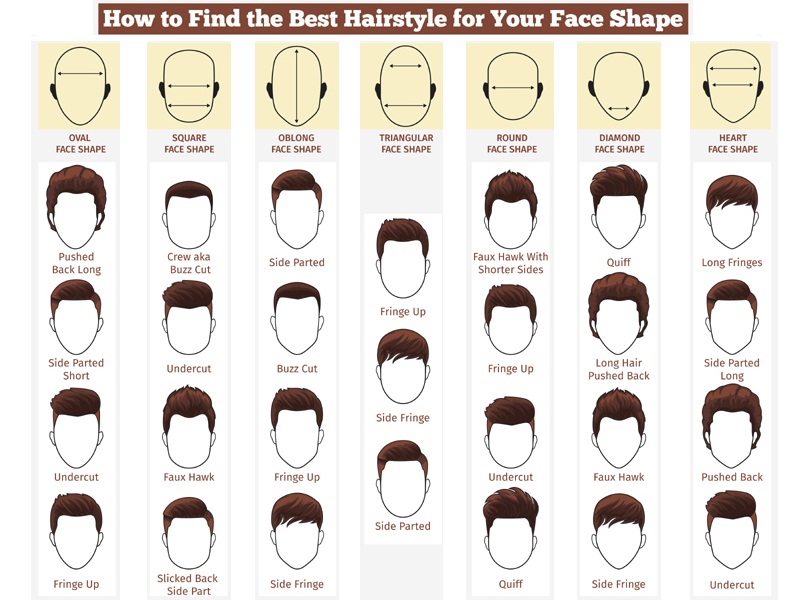
Your face shape is the primary determinant of which hairstyles will flatter you most. The right cut can balance proportions, soften sharp angles, or add definition where needed. To determine your face shape, stand in front of a mirror with your hair pulled back (or wet). Use a dry-erase marker or a bar of soap to trace the outline of your face directly onto the mirror. Step back and observe the shape you’ve drawn.
Here’s a breakdown of common face shapes and the styling principles that apply to each:
- Oval Face:
- Characteristics: Considered the "ideal" face shape due to its balanced proportions. The forehead is slightly wider than the chin, and the cheekbones are the widest part of the face.
- Styling Principle: Most versatile. Almost any style works well. The goal is to maintain balance and avoid extremes that could make the face appear too long or too wide.
- Recommended Styles: Classic side parts, quiffs, textured crops, slick-backs, even longer styles. Avoid heavy fringes that cover the forehead, as they can make the face appear rounder.
- Round Face:
- Characteristics: Equal in length and width, with soft, curved lines and a lack of sharp angles. Full cheeks and a rounded chin.
- Styling Principle: The aim is to add height and angles to elongate the face and create definition. Avoid styles that add width to the sides.
- Recommended Styles: High volume on top (e.g., pompadour, quiff, messy spikes), disconnected undercuts, side parts with some height, angular fringes that sweep to the side. Keep the sides relatively short and tight.
- Square Face:
- Characteristics: Strong, angular jawline, broad forehead, and equal width and length. Often associated with a masculine, rugged look.
- Styling Principle: You can either embrace the strong angles or soften them. Styles that add some height or softness on top work well.
- Recommended Styles: Classic cuts like the side part, crew cut, or buzz cut can enhance the strong features. For a softer look, consider a textured crop, a messy quiff, or a style with some length on top that can be swept back or to the side. Avoid blunt fringes that emphasize the width of the forehead.
- Oblong/Rectangle Face:
- Characteristics: Longer than it is wide, with a straight forehead and jawline. Similar to a square face but elongated.
- Styling Principle: The goal is to add width to the sides and reduce height on top to balance the length. Avoid styles that are too short on the sides and too long on top.
- Recommended Styles: Medium-length styles with volume on the sides (e.g., messy fringe, textured crop, side-swept styles). Fringes that fall onto the forehead can shorten the face. Avoid high fades or excessive height on top.
- Diamond Face:
- Characteristics: Wide, high cheekbones, with a narrower forehead and chin. Often has a pointed chin.
- Styling Principle: Aim to soften the sharp angles of the cheekbones and add width to the forehead and chin areas.
- Recommended Styles: Longer, layered styles that can be swept back or to the side to add width to the forehead. Textured fringes, side parts, and styles with some length around the ears can work well. Avoid styles that are too short on the sides or too voluminous on top, which can exaggerate the cheekbones.
- Triangle/Heart Face:
- Characteristics: (Triangle) Narrow forehead, wide jawline. (Heart) Wide forehead, narrow chin, sometimes with a widow’s peak.
- Styling Principle: (Triangle) Add width and volume to the top to balance the wider jaw. (Heart) Reduce width at the forehead and add volume to the chin area.
- Recommended Styles: (Triangle) Quiffs, pompadours, textured crops with volume on top. (Heart) Medium-length styles with fringes that fall onto the forehead, side parts, or styles that can be swept back to minimize forehead width. Avoid styles that are too short on the sides or too voluminous on top for heart shapes.
2. Understanding Your Hair’s Nature: Texture, Density, and Growth Patterns
Beyond face shape, your hair’s inherent qualities dictate what’s truly achievable and how much effort a style will require.
- Texture:
- Straight: Can be sleek, but may lack volume. Holds precise lines well.
- Wavy: Offers natural movement and volume. Can be styled neatly or messily.
- Curly: Provides significant volume and texture. Requires specific cutting techniques to manage frizz and define curls.
- Coily/Kinky: Very dense and voluminous. Best styled to embrace natural texture, often requiring specialized products and techniques.
- Density:
- Fine/Thin: Prone to looking flat. Benefits from cuts that add volume and texture (e.g., short, choppy layers).
- Medium: Most versatile.
- Thick: Can be heavy and unruly. Benefits from thinning techniques and cuts that remove bulk (e.g., fades, undercuts, layers).
- Growth Patterns: Cowlicks, whorls, and hair growth direction can significantly impact how a style lays. A skilled barber will work with these, not against them.
3. Lifestyle & Practicality: Your Daily Reality
Your haircut needs to fit seamlessly into your life. Consider:
- Profession: Is your workplace conservative or creative? A sharp, classic cut might be better for a corporate environment, while a more edgy or artistic style might suit a creative field.
- Activity Level: Are you highly active, frequently exercising or playing sports? A low-maintenance, sweat-resistant style might be preferable.
- Time Commitment: How much time are you willing to spend styling your hair each morning? Some styles require significant product and effort, while others are wash-and-go.
- Product Use: Are you comfortable using gels, pomades, waxes, or sprays? Some styles rely heavily on styling products.
The Digital Playground: Virtual Try-Ons
Once you have a clearer understanding of your face shape and hair type, you can begin to explore potential styles. In the digital age, virtual try-on tools offer a low-risk way to visualize different looks.
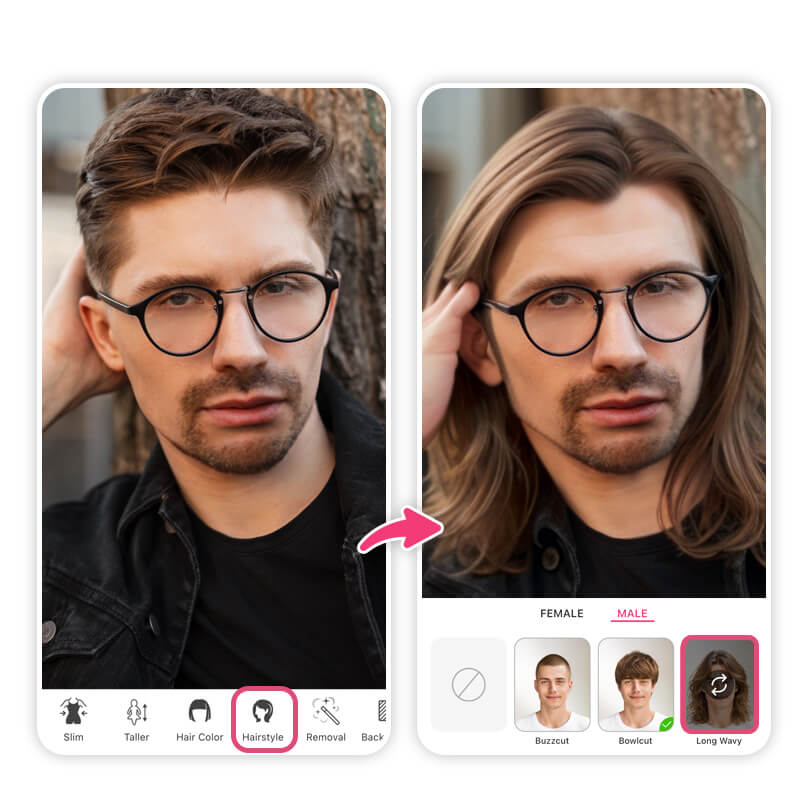
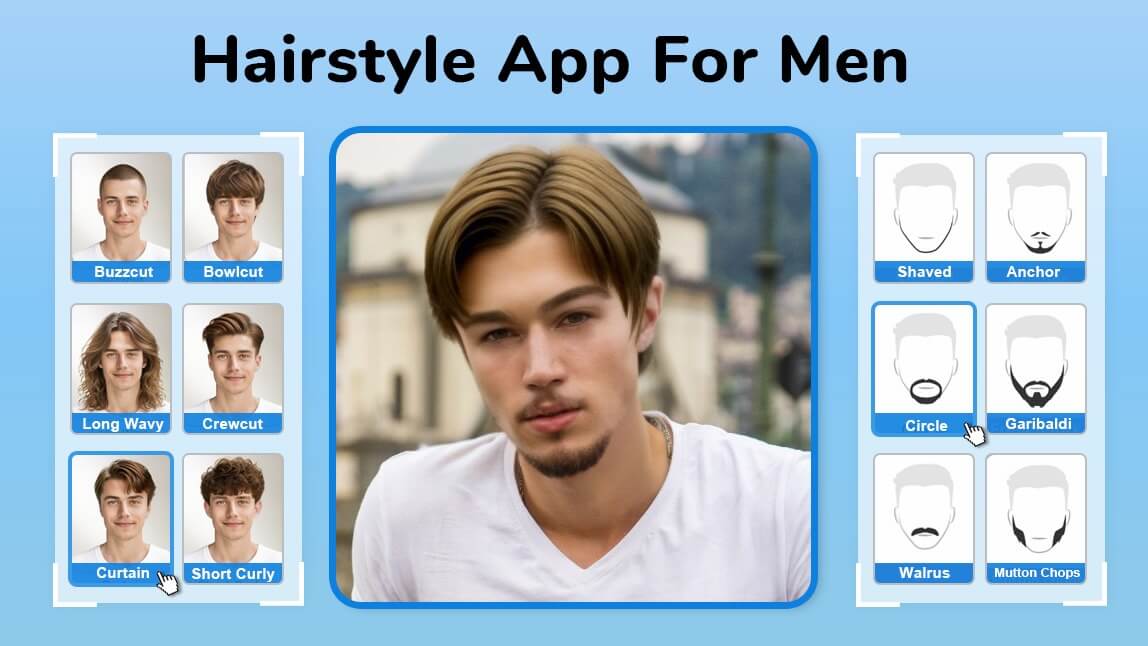
- Hairstyle Apps: Many apps (e.g., "Hair Zapp," "Hairstyle Changer Men") allow you to upload a photo of yourself and superimpose various hairstyles. While not perfectly accurate, they can give you a rough idea of how different lengths, textures, and fringes might look.
- Online Filters & AR Tools: Social media platforms often have filters that can temporarily change your hair. Some barber or product brands also offer augmented reality tools on their websites.
- Photo Editing Software: For the more tech-savvy, basic photo editing software allows you to cut and paste hairstyles from other images onto your own, offering a more customized (though time-consuming) preview.
Limitations: Remember that virtual try-ons are approximations. They don’t account for your hair’s natural texture, density, or how it will genuinely fall. They are best used for initial inspiration rather than definitive decisions.
The Barber’s Chair: Your Trusted Guide
The most critical step in trying a new hairstyle is consulting with a skilled barber or stylist. They are the experts who can translate your ideas into reality, taking into account all the factors you’ve just considered.
- Do Your Research: Look for barbers with strong portfolios, especially those showcasing diverse men’s styles. Read reviews. A good barber is an artist and a consultant.
- Bring Visuals: Don’t just describe what you want. Bring multiple photos of hairstyles you like (and even some you dislike, explaining why). Show them how you typically style your hair.
- Communicate Clearly:
- Be Specific: Instead of "shorter on the sides," say "a number 2 fade, blended up to a number 4."
- Discuss Your Lifestyle: Explain your daily routine, how much time you have for styling, and your comfort with products.
- Be Honest About Your Hair: Tell them about cowlicks, thinning areas, or any concerns you have.
- Ask Questions: "Do you think this style will work with my hair type?" "How much maintenance will this require?" "What products do you recommend?"
- Start Small (If Nervous): If you’re unsure, ask for a subtle change first. You can always go shorter or more dramatic next time.
- Listen to Their Advice: A good barber will offer honest feedback based on their expertise. They might suggest modifications to your desired style to better suit your features or hair type. Be open to their professional opinion.
The Journey of Adaptation & Refinement
Getting a new haircut is just the beginning. The transition period is crucial for truly embracing your new look.
- Patience is Key: Your hair might need a few days to settle into its new shape. You might also need time to get used to seeing yourself with a different style.
- Learn to Style: Ask your barber for a quick styling tutorial. What products should you use? How much? What techniques (blow-drying, finger-combing, brushing) are necessary? Practice at home. The difference between a good cut and a great look often lies in proper styling.
- Invest in Products: The right shampoo, conditioner, and styling products are essential for maintaining your new look and keeping your hair healthy.
- Feedback & Adjustments: After a week or two, assess how you feel about the style. Is it too long in certain areas? Does it fall correctly? Don’t hesitate to go back to your barber for minor adjustments or to discuss what you’d like to change for your next cut.
Embracing the Evolution
Trying new hairstyles is an ongoing journey of self-discovery and expression. It’s an opportunity to refresh your look, boost your confidence, and adapt to changing trends or personal preferences. Don’t be afraid to step out of your comfort zone. The worst-case scenario is a haircut you don’t love, which will inevitably grow out. The best-case scenario is discovering a signature style that perfectly complements who you are.
By understanding your unique features, leveraging digital tools, and building a strong relationship with a skilled barber, you can confidently navigate the exciting world of men’s hairstyles, transforming your appearance one confident cut at a time. Your face is your canvas; it’s time to paint a masterpiece.