Step back in time to an era of longships, sagas, and powerful Norse gods, and you’ll find a culture that, while often depicted as fierce and formidable, also possessed a profound appreciation for personal adornment and symbolic expression. For the Viking woman, hair was not merely an aesthetic feature; it was a canvas for identity, status, and protection. When it came to a wedding, a pivotal moment in any community, the bride’s hairstyle would have been a meticulously crafted statement, blending practicality with potent symbolism.
Today, as more couples seek to infuse their special day with unique historical flair, Viking-inspired weddings have surged in popularity. Central to achieving an authentic yet elegant look is the bridal hairstyle. Far from being simplistic, Viking wedding hair for women was a sophisticated art form, rich in braids, twists, and meaningful embellishments. This article delves into the historical context, key elements, and modern interpretations of Viking bridal hairstyles, offering inspiration for those wishing to channel the strength, beauty, and ancient spirit of the Norse bride.
The Significance of Hair in Viking Culture
Before exploring specific styles, it’s crucial to understand the profound cultural significance of hair in the Viking Age. For both men and women, long, well-kept hair was a sign of health, vitality, and social standing. Archaeological finds, such as combs and hair pins, attest to a meticulous approach to grooming. Hair was often associated with personal power, fertility, and even magical protection. Sagas and myths frequently describe characters by their hair – from the golden locks of the goddess Sif, symbolizing fields of wheat, to the formidable braids of shield-maidens.
For a woman, her hair was a public declaration of her status. Unmarried women might wear their hair loose or in simpler styles, while married women often wore their hair covered or elaborately styled, perhaps indicating their transition into a new phase of life and responsibility. On her wedding day, a bride’s hair would have been her crowning glory, a testament to her family’s wealth and her own beauty, interwoven with blessings for fertility and a strong union.
The Foundation: The Art of the Braid
At the heart of almost every Viking-inspired hairstyle lies the braid. More than just a decorative element, braids were practical, keeping long hair out of the way during daily activities, and durable, capable of withstanding the rigors of travel and work. Symbolically, braids represented unity, strength, and the weaving together of destinies – perfect metaphors for a wedding.
Here are the fundamental braiding techniques that form the backbone of Viking bridal hair:
-
The Simple Three-Strand Braid: This ubiquitous braid would have been the most common. For a wedding, it would be elevated by its placement and number. Imagine multiple three-strand braids woven into a larger updo, or two thick braids framing the face and meeting at the back.
-
French and Dutch Braids (Cornrows): These techniques, where hair is added progressively as the braid moves down the head, create a beautiful, sculpted effect close to the scalp.
- French Braids: Create a seamless, elegant look where the braid lies flat against the head. Perfect for crown braids, halo braids, or intricate patterns across the scalp.
- Dutch Braids: Similar to French braids but with the strands crossed under each other, making the braid stand out in relief, creating a more pronounced, almost rope-like appearance. These are incredibly popular for a dramatic, textured Viking look, often used for side braids or a central "Viking braid" running down the back of the head.
-
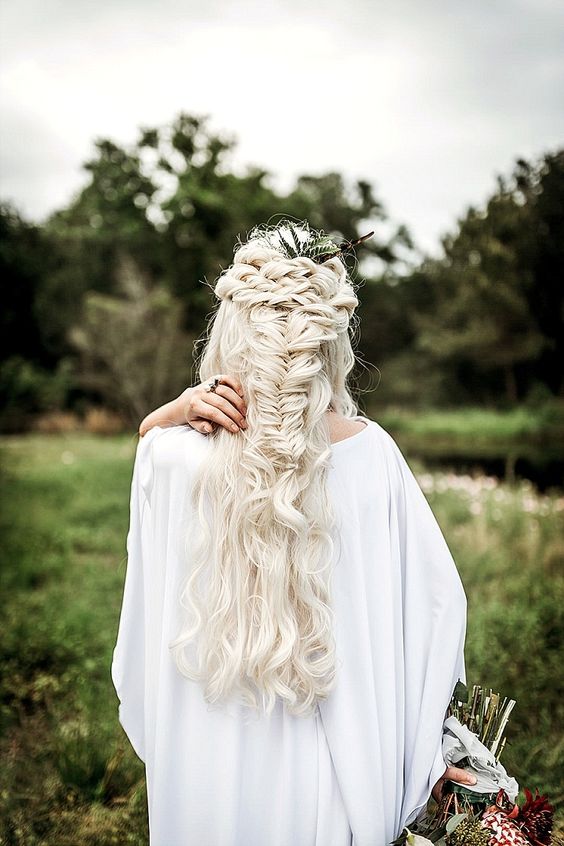
Fishtail Braid: While perhaps less historically common than the three-strand, the fishtail braid’s intricate, scale-like pattern perfectly evokes a sense of ancient craftsmanship. It involves dividing hair into two sections and taking small strands from the outside of one section to cross over to the inside of the other. A thick, loose fishtail braid can be stunning as a central feature or as an accent.
-
Four-Strand and Five-Strand Braids: For truly elaborate styles, multi-strand braids add incredible texture and volume. These are more complex to execute but result in a rich, wide braid that looks exceptionally luxurious, ideal for a bridal statement.
-
Crown and Halo Braids: These involve braiding hair around the head, creating a natural, regal circlet. A Dutch braid crown offers a more pronounced, textured look, while a French braid crown is smoother and more understated. These styles beautifully frame the face and are perfect for showcasing delicate facial features or headpieces.
Beyond Braids: Twists, Knots, and Updos
While braids were paramount, Viking women also utilized other techniques to manage and adorn their hair:
- Twists (Rope Braids): Simple two-strand twists, where two sections of hair are twisted around each other, can be used as elegant accents, to frame the face, or to create a more relaxed, bohemian feel. They are often combined with braids.
- Knots: Inspired by Celtic and Norse knotwork, hair could be styled into intricate, interweaving patterns. While challenging to achieve authentically without modern tools, the spirit of knotwork can be incorporated into updos by creating interwoven loops and twists that mimic the endless patterns. A simple coiled bun, secured with pins, could also be seen as a form of hair knot.
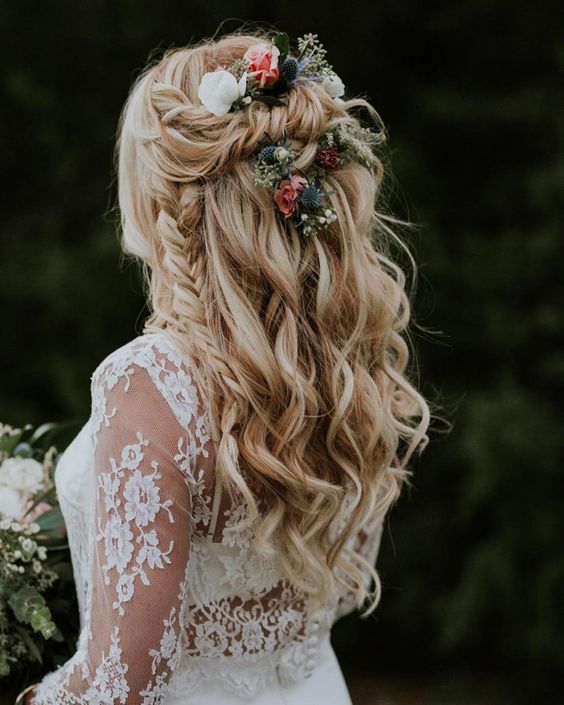
- Updos and Half-Up Styles: For a wedding, an updo would have been practical for keeping hair neat and showcasing adornments. Braided buns, where multiple braids are coiled and pinned at the nape of the neck or crown, would have been common. Half-up, half-down styles, where the top section of hair is braided or twisted and secured while the rest flows freely, offer a softer, romantic alternative, especially for very long hair.
The Adornments: Symbolism and Sparkle
No Viking bridal hairstyle would be complete without its embellishments. These were not merely decorative; each element often carried symbolic weight, reflecting wealth, protection, or blessings for the union.
-
Beads and Rings:
- Hair Beads: Made from various materials like metal (bronze, silver, gold), glass, amber, or wood, beads were threaded onto individual braids or sections of hair. They could signify status, act as talismans, or simply add beauty. For a modern bride, metallic beads or beads with intricate patterns can add a subtle shimmer.
- Braid Rings: Small metal rings, often intricately patterned, were used to secure the ends of braids or to adorn sections of hair. These were particularly common for men but would have been used by women as well.
-
Ribbons and Fabric Strips:
- Woven into braids or tied around updos, strips of wool, linen, or even imported silk would have added color and texture. Red was a potent color, often associated with protection and passion. Green for fertility, blue for loyalty. These simple additions can dramatically transform a hairstyle, adding a touch of softness and vibrancy.
-
Metalwork and Jewelry:
- Hair Pins and Combs: Elaborate pins and combs, often crafted from bone, wood, or metal, would have been used to secure updos and add decorative flair. Modern reproductions can feature intricate Norse patterns or animal motifs.
- Brooches and Pendants: While primarily used on clothing, smaller brooches or pendants could be adapted as hair ornaments, pinned into a bun or at the base of a braided updo.
- Coins: For some, coins (especially silver ones) might have been incorporated into hair or headwear as a display of wealth and good fortune.
-
Flowers and Greenery:
- Fresh Flowers: Depending on the season and availability, fresh wildflowers, herbs, or greenery would have been woven into braids or fashioned into simple wreaths. Flowers like chamomile, yarrow, or sprigs of rosemary (for remembrance) could have been used. This adds a natural, ethereal beauty, connecting the bride to the earth and its cycles of fertility.
- Dried Flowers and Herbs: For durability, especially in colder months, dried flowers and herbs could also be incorporated, offering a more rustic, enduring charm.
-
Circlets and Headbands:
- Simple Bands: A plain leather or fabric band could be worn around the forehead or crown, sometimes adorned with metal studs or small carved elements.
- Metal Circlets: More elaborate brides might have worn simple metal circlets, perhaps adorned with geometric patterns or animal motifs. These are often inspired by archaeological finds and provide a regal touch without being overly ornate.
Crafting Your Viking Bridal Look: Modern Adaptations
While strict historical accuracy can be challenging and sometimes impractical for a modern wedding, the spirit and elements of Viking bridal hair can be beautifully adapted.
- Embrace the Braid: This is non-negotiable. Whether it’s a single dramatic Dutch braid, multiple delicate French braids woven together, or a voluminous braided bun, braids are the cornerstone. Consider your hair length and thickness when choosing your primary braid style. Long, thick hair lends itself well to complex, multi-strand braids and voluminous updos.
- Strategic Placement: Think about where you want the focus. A crown braid highlights the face. A long, intricate braid down the back makes a statement from behind. Side braids can draw attention to the profile.
- Balance Adornments: Don’t overdo it. Choose a few key pieces that resonate with you. Perhaps a delicate circlet with a few strategically placed hair beads, or a lush floral wreath combined with simple ribbon-woven braids. Less can often be more, allowing the intricate braiding to shine.
- Consider Your Dress: Your hairstyle should complement your wedding gown. A flowing, simple dress might call for a more elaborate hairstyle, while a heavily detailed dress might be better paired with a slightly simpler, elegant braided updo to avoid visual clutter.
- Work with a Specialist: Finding a hairstylist experienced in intricate braiding or historical styles is highly recommended. Bring them inspiration photos, discuss your vision, and schedule a trial run well in advance. They can advise on what is achievable with your hair type and length.
- Hair Health is Key: Viking women prized healthy, long hair. Start a good hair care routine months before your wedding. Regular conditioning, minimizing heat styling, and nourishing treatments will ensure your hair is strong and lustrous, perfect for holding elaborate styles.
- Personalize and Symbolize: Research Norse mythology or Viking symbolism that resonates with you. Perhaps you want to incorporate beads of a specific color for protection, or a circlet with a wolf motif for loyalty. Your wedding hair can be a deeply personal narrative.
Conclusion
The Viking wedding hairstyle for women is a captivating blend of strength, beauty, and ancient symbolism. It speaks to a time when adornment was not frivolous but deeply meaningful, a reflection of identity and aspiration. By embracing the art of braiding, the thoughtful use of adornments, and a connection to the rich history of the Norse people, the modern bride can create a wedding look that is not only stunning but also imbued with the powerful, enduring spirit of the Viking Age. It’s more than just a hairstyle; it’s a tribute to heritage, a declaration of love, and a timeless expression of feminine power.