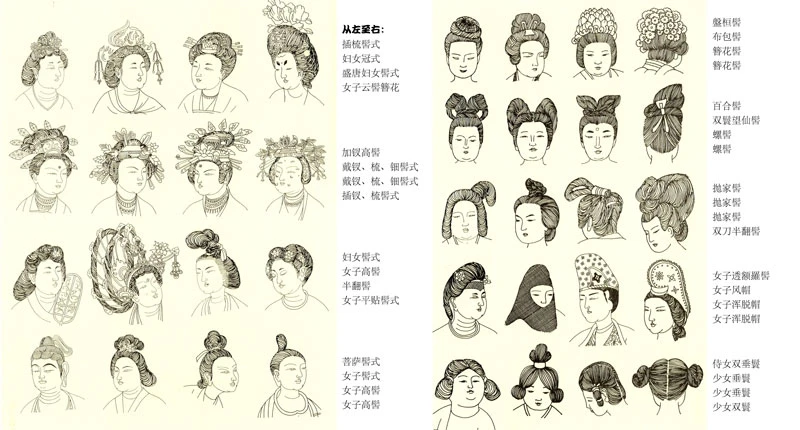
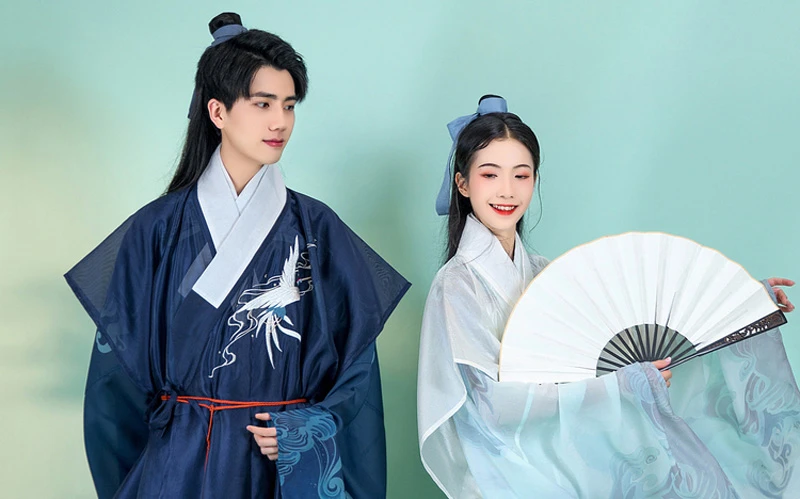
The history of China is a tapestry woven with threads of philosophy, art, and societal evolution, and nowhere is this more vividly reflected than in the intricate world of traditional Chinese hairstyles. Far from mere aesthetic choices, these coiffures were potent symbols of status, age, marital status, and even political allegiance. While direct, single "names" like modern styles are rare, traditional Chinese hairstyles are identified by descriptive terms, often reflecting their shape, the dynasty they belonged to, or the social group that wore them. To delve into these names is to embark on a journey through millennia of Chinese culture, where hair was not just hair, but a canvas for identity and expression.
The Tapestry of Time: A Historical Overview
From the simple topknots of ancient times to the elaborate constructions of imperial courts, Chinese hairstyles underwent dramatic transformations. Early periods, such as the Shang and Zhou dynasties, saw relatively simple styles, often tied with ribbons or adorned with basic pins. The true blossoming of hair artistry began during the Han Dynasty, laying the groundwork for the sophisticated styles that would follow.
The Tang Dynasty, a golden age of prosperity and cultural exchange, witnessed an explosion of creativity in hairstyles, characterized by their towering height, elaborate ornamentation, and diverse forms. The Song Dynasty, in contrast, favored more subtle and refined aesthetics, reflecting a shift towards Neo-Confucian ideals. The Ming Dynasty saw a return to more structured and formal styles, often incorporating elaborate headwear. Finally, the Qing Dynasty introduced the distinctive Manchu styles, which became iconic but also represented a period of cultural imposition.
Understanding these dynastic shifts is crucial, as many "names" or descriptive terms for hairstyles are inextricably linked to their historical context and the social norms of their time.
The Art of Adornment: Female Hairstyles
Female hairstyles were undoubtedly the most diverse and elaborate, serving as a primary indicator of a woman’s social standing, age, and marital status. The "names" often describe the form or the inspiration behind the style.
1. The Han Dynasty (206 BCE – 220 CE): Elegant Simplicity and Emerging Sophistication
Han Dynasty hairstyles, while less flamboyant than later eras, laid the foundation for future developments. The emphasis was on elegance and natural beauty, often involving simple buns and braids.
- Jī (髻): This is a general term for a bun or topknot, a fundamental element of most Chinese hairstyles across dynasties. It simply refers to hair gathered and coiled on the head.
- Duì Wō Jī (堕马髻): Literally "Fallen Horse Bun," this was a popular asymmetrical style where the bun was positioned to one side, giving the impression of a horse’s mane having fallen to one side. It was considered elegant and somewhat relaxed.
- Liǎng Bǎotóu (两把头): Meaning "Two-Handed Bun" or "Two-Coil Bun," this style featured two symmetrical loops or coils of hair on either side of the head, often seen on younger women or maids. It was a simpler, more practical style.
2. The Tang Dynasty (618 – 907 CE): Opulence, Diversity, and Towering Heights
The Tang Dynasty was a period of unprecedented cultural flourishing, and hairstyles reflected this grandeur. Women’s hair reached new heights, often supported by internal structures, and were adorned with lavish ornaments.
- Gāo Jī (高髻): "High Bun" or "Tall Bun." This is a broad category encompassing many towering styles. The height of the bun often symbolized the wearer’s status. Examples include:
- Wō Jī (倭髻): A low, flat bun, often worn by commoners or for more casual occasions.
- Huí Xīn Jī (回心髻): "Returning Heart Bun." A complex, often heart-shaped bun with intricate loops and coils, signifying love or devotion.
- Fēitiān Jī (飞天髻): "Flying Immortal Bun." Inspired by Buddhist celestial beings (Apsaras), this style featured upward-sweeping, wing-like formations, giving a sense of lightness and divinity.
- Wūmǎn Jī (乌蛮髻): "Black Barbarian Bun." This unique style featured hair gathered into a large, flat, and often dark bun, sometimes influenced by the hairstyles of ethnic minorities from the southwest.
- Jié Jī (髻): "Knot Bun." A general term for buns that involved intricate knotting and weaving of hair, often creating complex patterns.
- Bàn Fā Jī (半发髻): "Half-Up Bun." A more casual style where part of the hair was gathered into a bun while the rest flowed freely, popular among younger women.
3. The Song Dynasty (960 – 1279 CE): Subtlety, Refinement, and Neo-Confucian Influence
Following the extravagance of the Tang, Song Dynasty hairstyles became more understated, emphasizing natural beauty and elegant simplicity. Buns were generally lower and less ornate.
- Chén Yún Jī (衬云髻): "Cloud-Lined Bun." A soft, rounded bun, often low at the nape of the neck, designed to frame the face gently, reminiscent of soft clouds.
- Bāo Jī (包髻): "Wrapped Bun." This style often involved wrapping the hair tightly, sometimes with the aid of a hairnet or fabric, creating a neat and compact bun.
4. The Ming Dynasty (1368 – 1644 CE): Regal Formality and Structured Beauty
Ming Dynasty hairstyles were characterized by their formality, symmetry, and often incorporated elaborate frames or headpieces.
- Diàn Zǐ (钿子): While not a hairstyle in itself, the Diàn Zǐ was a crucial accessory – an ornate frame or cap, often made of wire, pearls, and jewels, over which hair was styled. It dictated the shape of the coiffure, often creating a broad, flat, and highly decorated silhouette. The hair would be styled to fit over this frame, giving the appearance of a very elaborate bun.
- Pán Lóng Jī (盘龙髻): "Coiled Dragon Bun." A highly intricate bun, often reserved for nobility, designed to resemble a coiled dragon, symbolizing power and auspiciousness.
5. The Qing Dynasty (1644 – 1912 CE): Manchu Distinctiveness and Imperial Iconography
The Qing Dynasty, founded by the Manchu people, brought a distinct set of hairstyles that differed significantly from Han Chinese traditions. While Han women initially retained their styles, the Manchu styles became iconic of the imperial court.
- Liǎng Bǎotóu (两把头): This "Two-Handed Bun" reappears, but in a much more elaborate Manchu form. It involved styling the hair into two large, flat, wing-like sections on either side of the head, often supported by a flat, stiff board or frame. It was frequently adorned with elaborate flowers, tassels, and pearl fringes.
- Dà Lā Chì (大拉翅): "Large Flat Wing" or "Big Banner Head." This was an evolution of the Liǎng Bǎotóu, becoming even larger and more prominent, often resembling a large, flat fan or banner. It was typically worn by empresses, concubines, and noblewomen, symbolizing their high status.
- Qí Tóu (旗头): "Banner Head." A general term for Manchu women’s elaborate headwear and hairstyles, encompassing styles like the Liǎng Bǎotóu and Dà Lā Chì.
- Biān Zǐ (辫子): "Braids." While the queue was forced upon men, braids were a common and traditional style for young Han Chinese girls and unmarried women, often adorned with colorful ribbons.
The Dignity of the Dragon: Male Hairstyles
Male hairstyles, though generally less ornate than female ones, were equally significant, often reflecting social status, profession, and philosophical beliefs.
1. Pre-Qing Dynasties (Han, Tang, Song, Ming): The Topknot and Headwear
For most of Chinese history before the Qing, adult Han Chinese men traditionally wore their hair long, often tied into a topknot or bun, in accordance with Confucian filial piety, which dictated that one should not harm the body, including hair, received from one’s parents.
- Fā Jì (发髻): The ubiquitous "Hair Bun" or "Topknot." This was the most common underlying style for men. Hair was gathered at the crown of the head and coiled into a bun.
- Guān (冠): "Cap" or "Crown." While not a hairstyle itself, the guān was an essential piece of headwear that often covered the topknot. Different types of guān indicated different ranks and professions (e.g., scholar’s cap, official’s cap).
- Rú Jīn (儒巾): "Scholar’s Cap." A specific type of guān worn by scholars, typically black and square-shaped, covering the topknot.
2. The Qing Dynasty (1644 – 1912 CE): The Imposed Queue
The most iconic and politically charged male hairstyle in Chinese history is undoubtedly the queue, imposed by the Manchu rulers of the Qing Dynasty.
- Biàn Zǐ (辫子) / Qián Biàn (前辫): The "Queue" or "Pigtail." This style required men to shave the front of their heads and braid the remaining hair into a long pigtail that hung down the back. Initially a symbol of submission to Manchu rule, it became a deeply ingrained part of Chinese male identity during the Qing. Refusal to wear the queue was considered an act of rebellion and punishable by death.
Beyond the Hair: Accessories and Symbolism
The "names" of hairstyles often imply the accessories that accompanied them, which were integral to their beauty and meaning.
- Chāi (簪): Hairpins. These were not just functional but highly decorative, often crafted from jade, gold, silver, or ivory, and shaped into auspicious animals like phoenixes (symbolizing the empress or female power) and dragons (symbolizing the emperor or male power), or intricate floral designs.
- Bù Yáo (步摇): "Shake as you walk." These were elaborate hairpins with dangling ornaments that would sway and jingle with movement, adding a dynamic element to the hairstyle.
- Shū (梳): Combs. Often made from precious materials, combs were used for styling and as decorative elements.
- Fā Shì (发饰): General term for hair ornaments, including ribbons, silk flowers, pearls, and precious stones, all contributing to the overall grandeur and symbolism of the coiffure.
Symbolically, hairstyles communicated a wealth of information. Height and elaboration often signified wealth and status. Simpler styles could denote humility or mourning. Unmarried women typically wore more elaborate or distinct styles than married women. The presence of specific ornaments like phoenixes or dragons clearly indicated imperial connections. The careful grooming of hair also reflected a person’s adherence to societal norms and their respect for tradition.
The Lingering Legacy
Traditional Chinese hairstyles, with their evocative "names" and intricate designs, offer a fascinating window into the soul of a civilization. They are not merely historical curiosities but living testaments to artistic ingenuity, cultural values, and the profound connection between personal appearance and collective identity. From the delicate "Fallen Horse Bun" of the Han to the towering "Flying Immortal Bun" of the Tang, and the politically charged "Queue" of the Qing, each style tells a story of an era, a people, and a profound appreciation for beauty and symbolism. Even today, these ancient coiffures continue to inspire modern fashion, art, and cinema, ensuring that the whispers of silk and jade endure.