Have you ever stared at a magazine spread, admiring a stunning haircut on a celebrity, only to try it yourself and feel… underwhelmed? Or perhaps you’ve scrolled through endless Pinterest boards, hoping to find that one perfect style that just clicks. The truth is, while trends come and go, and personal preference plays a huge role, the secret to a truly flattering hairstyle often lies in understanding one fundamental element: your face shape.
Your face shape acts as the canvas, and your hairstyle is the frame. Just as a beautiful painting needs the right frame to enhance its features, your hair can either highlight your best attributes or inadvertently draw attention to areas you’d rather downplay. This isn’t about rigid rules, but rather about understanding the principles of balance, proportion, and harmony. By learning to identify your unique face shape and the styles that complement it, you unlock a world of possibilities that go beyond fleeting trends, leading to a look that feels authentically you and truly enhances your natural beauty.
In this comprehensive guide, we’ll delve into the fascinating world of face shapes, helping you accurately identify your own, understand the core principles of what works, and explore a myriad of specific hairstyle recommendations for both men and women.
First Things First: How to Determine Your Face Shape
Before we dive into specific recommendations, you need to accurately identify your face shape. This isn’t always as straightforward as it seems, as many people have a blend of characteristics. However, by taking a few simple measurements and observing your features, you can get a very good idea.
Method 1: The Mirror & Marker Test
- Stand in front of a mirror with good lighting.
- Pull all your hair back from your face, securing it with a headband or clips.
- Using a washable marker, lipstick, or even a bar of soap, carefully trace the outline of your face onto the mirror. Start from your chin, go up along your jawline, around your ears, across your hairline, and back down to your chin.
- Step back and observe the shape you’ve drawn.
Method 2: The Measurement Method
Using a soft measuring tape, take the following measurements:
- Forehead: Measure across the widest part of your forehead (usually halfway between your eyebrows and hairline).
- Cheekbones: Measure across the fullest part of your cheekbones, starting and ending at the sharpest point below the outer corner of each eye.
- Jawline: Measure from the tip of your chin to the point where your jaw angles upwards, then multiply that number by two.
- Face Length: Measure from the center of your hairline to the bottom of your chin.
Now, let’s compare your observations and measurements to the common face shapes:
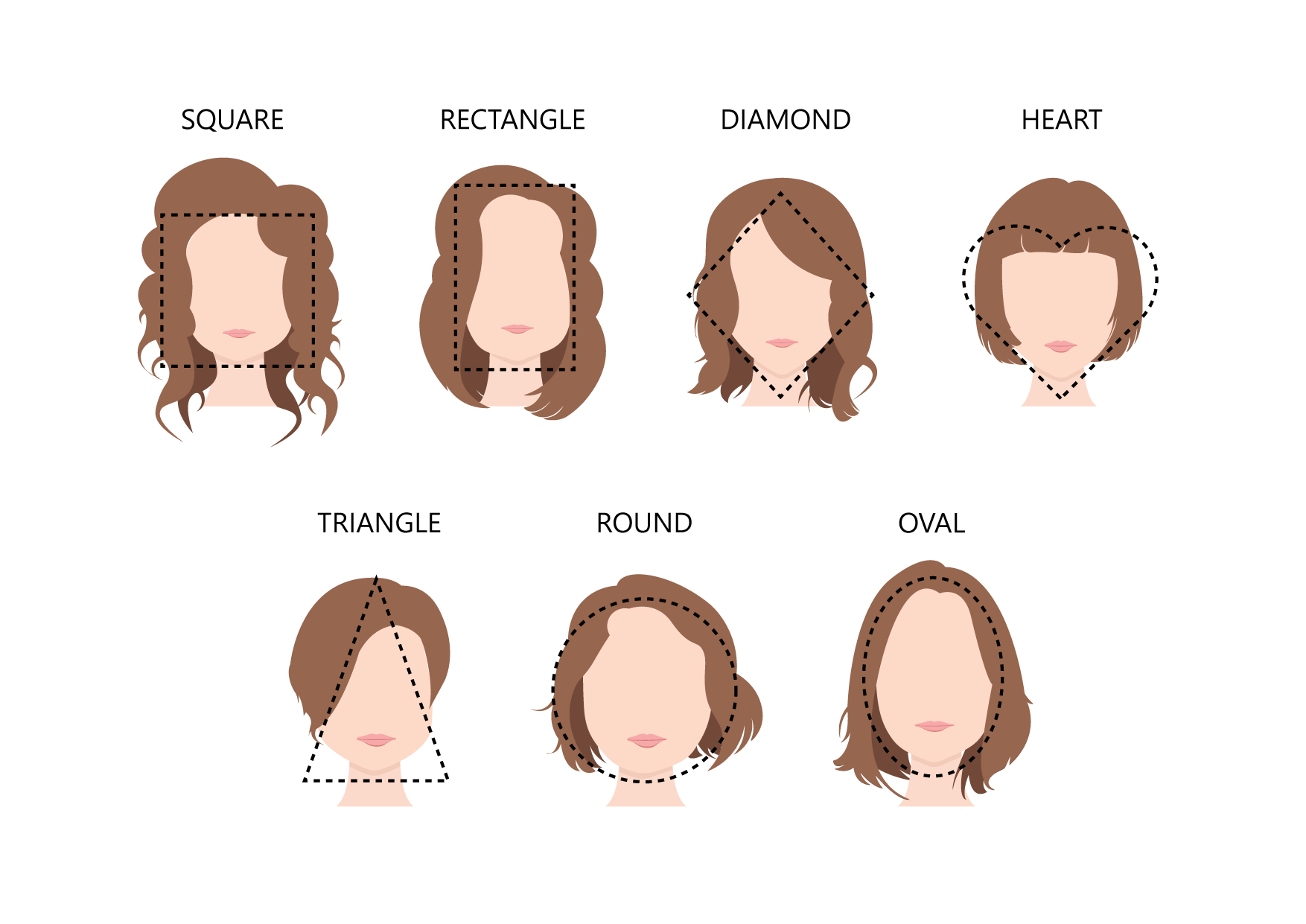
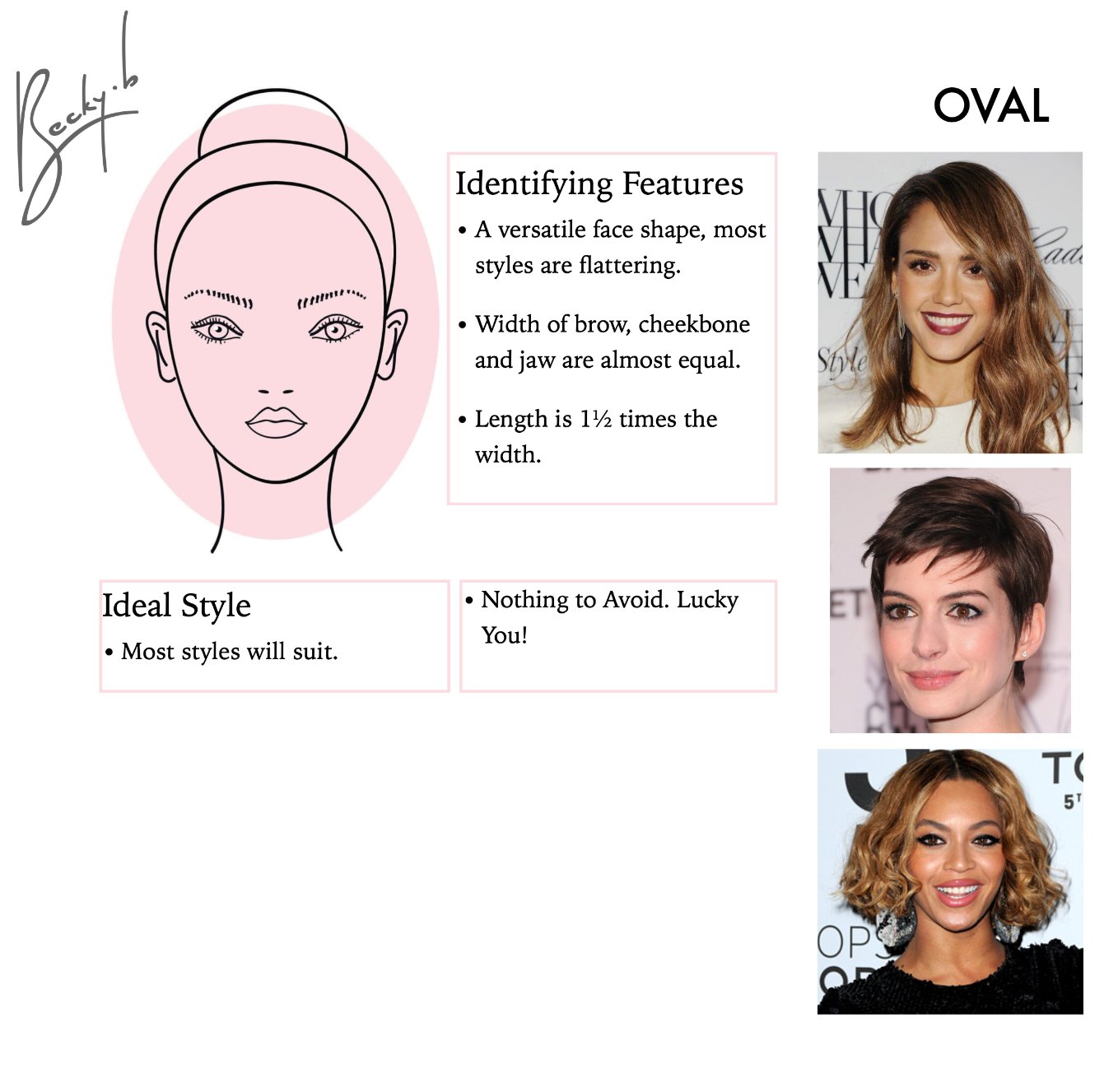
- Oval: Face length is roughly 1.5 times the width. Forehead is slightly wider than the chin. Cheekbones are the widest part of the face. The jawline is gently rounded, with no sharp angles. Considered the "ideal" shape due to its inherent balance.
- Round: Face length and width are nearly equal. Widest at the cheekbones. Soft, rounded jawline and chin. No sharp angles.
- Square: Face length and width are nearly equal. Forehead, cheekbones, and jawline are all roughly the same width. Strong, angular jawline.
- Heart: Wider at the forehead and cheekbones, narrowing significantly towards a pointed chin. May have a widow’s peak.
- Long/Oblong: Face length is significantly longer than its width. Forehead, cheekbones, and jawline are all roughly the same width. Can sometimes be a longer version of a square or oval.
- Diamond: Widest at the cheekbones. Forehead and jawline are narrower than the cheekbones. Chin is often pointed.
- Triangle (or Pear): Wider at the jawline, narrowing towards the forehead. Often has a prominent jaw.
General Principles of Flattering Hairstyles
Regardless of your specific face shape, the goal of a great haircut is usually to:
- Create Balance: If one feature is dominant (e.g., a wide forehead), the hair can help balance it out.
- Add or Subtract Volume: Volume can be used to widen or narrow the appearance of certain areas.
- Soften or Enhance Angles: Hair can soften a strong jawline or add definition to a soft one.
- Create Illusion: Make a face appear longer, shorter, wider, or narrower.
- Highlight Best Features: Draw attention to your eyes, cheekbones, or lips.
Tailoring Your Tresses: Hairstyle Recommendations by Face Shape
Now that you know your face shape, let’s explore the best hairstyles to complement your unique features.
1. Oval Face Shape
Characteristics: Balanced proportions, gently rounded chin, forehead slightly wider than chin.
The Goal: Maintain the natural balance and versatility. Almost any style works, so focus on highlighting your best features.
For Women:
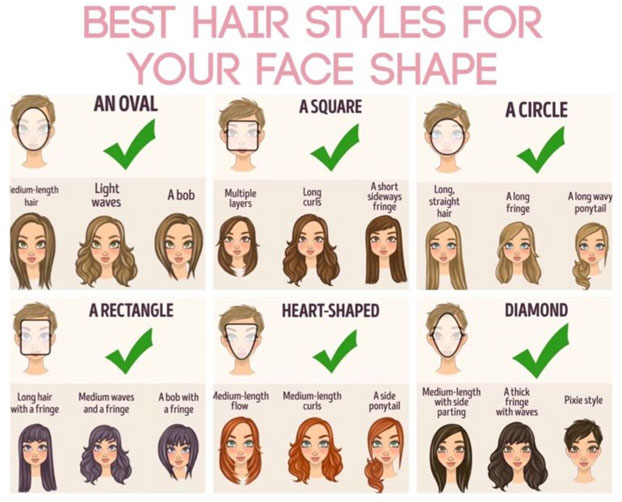
- Long Layers: A classic choice that enhances the natural flow without adding bulk.
- Shoulder-Length Bobs: From blunt to layered, bobs beautifully frame the oval face.
- Pixie Cuts: Showcase your perfect proportions and draw attention to your eyes.
- Bangs (Fringe): Nearly all types work – full, wispy, side-swept, curtain bangs. They can add a touch of personality.
- Updos: Oval faces look stunning with various updos, from sleek ponytails to intricate braids, as they don’t need to compensate for any imbalances.
For Men:
- Classic Taper: Clean sides and back with a bit more length on top.
- Side Part: A timeless and sophisticated look.
- Quiff or Pompadour: Adds volume and style without distorting the natural balance.
- Slightly Longer Styles: Can be worn pushed back or with natural texture.
Styles to Avoid: Very heavy, blunt bangs that cover too much of the forehead can sometimes make the face appear shorter than it is, though this is a minor concern for an oval.
2. Round Face Shape
Characteristics: Equal length and width, soft jawline, full cheeks.
The Goal: Add length and angles to create the illusion of a more elongated face, minimizing width.
For Women:
- Long Layers: Layers starting below the chin help elongate the face.
- Asymmetrical Bobs: A bob that’s longer in the front than the back, or a deep side part, adds angles and breaks up the roundness.
- Side-Swept Bangs: These draw the eye diagonally, creating the illusion of length.
- High Volume on Top: Styles with height at the crown (e.g., a subtle pompadour or teased roots) add vertical length.
- Wavy or Curly Hair: If you have natural waves, embrace them! They add texture and break up the roundness.
For Men:
- Fades (High & Tight): Shorter sides and back with more length on top create height and definition.
- Pompadour or Quiff: Adds significant height to the top, elongating the face.
- Angular Fringe: A textured fringe that falls to one side can add an angular element.
- Undercut: Similar to a fade, it creates contrast and emphasizes height.
Styles to Avoid: Blunt, straight-across bangs; chin-length bobs that end at the widest part of the face; very short, rounded cuts that emphasize the roundness; center parts with flat hair.
3. Square Face Shape
Characteristics: Equal length and width, strong, angular jawline, broad forehead.
The Goal: Soften the strong angles of the jawline and forehead, adding curves and movement.
For Women:
- Long, Wavy Layers: Soft waves and curls are fantastic for softening sharp angles. Layers should start around the jawline or below.
- Side-Swept Bangs or Curtain Bangs: These break up the width of the forehead and draw attention to the eyes.
- Long Bobs (Lobs): A lob that ends a few inches below the chin is very flattering, as it extends past the jawline.
- Textured Pixie: A pixie with soft, wispy layers or a side-swept fringe can work beautifully, softening the overall look.
- Volume at the Crown: Adding height can elongate the face slightly.
For Men:
- Textured Crop: A short, choppy style on top with faded sides can soften the edges.
- Slightly Longer Hair on Top: Styles like a messy quiff or a textured comb-over add softness and volume.
- Side Part with Volume: Creates a less severe line than a center part.
- Medium Length with Layers: If growing out, layers can break up the blockiness.
Styles to Avoid: Blunt, chin-length bobs that highlight the jawline; very short, angular cuts; straight, heavy bangs that emphasize the broad forehead; center parts with sleek, straight hair.
4. Heart Face Shape
Characteristics: Wide forehead and cheekbones, narrowing to a pointed chin, often with a widow’s peak.
The Goal: Balance the wider forehead with the narrower chin, adding width and volume around the jawline.
For Women:
- Long Layers: Layers that start around the chin or collarbone help add volume and width to the lower part of the face.
- Side-Swept Bangs or Wispy Bangs: These soften the forehead and draw attention away from the width.
- Long Bobs (Lobs): Ending below the chin, they add fullness where it’s needed.
- Shoulder-Length Hair with Waves: Waves around the chin area create the illusion of width.
- Pixie with Volume at the Nape: A longer pixie that’s fuller around the ears and nape can balance the chin.
For Men:
- Medium Length Hair: Styles that are fuller around the sides and back, like a textured fringe or a messy top.
- Fringe (Bangs): A textured fringe can help reduce the appearance of a wide forehead.
- Side Part: Can help balance the proportions.
- Slightly Longer Sides: Avoid very short fades on the sides, as they can emphasize the narrow chin.
Styles to Avoid: Short, blunt bangs that emphasize the forehead; very short, sleek pixies that make the chin appear even more pointed; high ponytails that pull hair away from the face.
5. Long/Oblong Face Shape
Characteristics: Face length is significantly longer than its width. Forehead, cheekbones, and jawline are roughly the same width.
The Goal: Create the illusion of width and reduce vertical length.
For Women:
- Bangs (Fringe): Crucial for shortening the face. Full, blunt bangs or curtain bangs are excellent choices.
- Chin-Length or Shoulder-Length Bobs: These add width at the cheekbones and jawline, breaking up the length.
- Wavy or Curly Hair: Adds volume and width, making the face appear less elongated.
- Side Parts: A deep side part can create the illusion of width.
- Layered Hair with Volume at the Sides: Layers that add fullness around the ears and cheekbones.
For Men:
- Fringe (Bangs): A textured fringe or messy bangs that fall onto the forehead can shorten the face.
- Medium Length Hair: Styles that have more volume on the sides rather than just on top.
- Side Part with a Bit of Length: Avoid overly high quiffs or pompadours that add more height.
- Undercuts with Longer Top: Ensure the top isn’t too high; focus on width and texture.
Styles to Avoid: Long, straight hair with no layers or bangs; styles with excessive height at the crown (e.g., very high pompadours); center parts with flat hair.
6. Diamond Face Shape
Characteristics: Widest at the cheekbones, narrower forehead and jawline, often a pointed chin.
The Goal: Soften the cheekbones, and add width to the forehead and chin.
For Women:
- Side-Swept Bangs or Wispy Bangs: These help soften the forehead and balance the width of the cheekbones.
- Chin-Length Bobs: A bob that ends around the chin can add volume to the narrow jawline.
- Long Layers: Layers that start around the chin or below can soften the cheekbones and add fullness to the lower face.
- Wavy or Curly Hair: Adds softness and volume around the jawline.
- Tucked Behind Ears: Wearing hair tucked behind the ears can showcase the cheekbones while allowing the hair to fall softly around the jaw.
For Men:
- Textured Fringe: A messy or textured fringe can soften the forehead.
- Medium Length Styles: Hair that has some length on the sides and top, allowing for softness around the cheekbones.
- Side Part with Volume: Creates a balanced look.
- Avoid Very Short Sides: This can emphasize the wide cheekbones.
Styles to Avoid: Straight, sleek hair pulled back from the face; blunt, straight-across bangs that emphasize the forehead; styles that add too much volume at the cheekbones.
7. Triangle (or Pear) Face Shape
Characteristics: Wide jawline, narrow forehead, sometimes a pointed chin.
The Goal: Add width and volume to the forehead and temples, while softening the jawline.
For Women:
- Bangs (Fringe): Full, blunt bangs or heavy side-swept bangs are excellent for adding width to the forehead.
- Short to Medium Length Hair: Styles that are fuller around the temples and crown.
- Pixie Cuts with Volume on Top: A pixie with height and volume at the crown can balance the jaw.
- Layered Bobs: A-line bobs or graduated bobs that are shorter in the back and longer in the front can work, especially if they have volume around the temples.
- Volume at the Crown: Teasing or styling for height at the top helps balance the wider jaw.
For Men:
- Textured Quiff or Pompadour: Adds significant height and volume to the top and forehead.
- Fringe (Bangs): A messy or textured fringe can widen the appearance of the forehead.
- Slightly Longer Sides on Top: Avoid very tight fades on the sides, which can emphasize the jaw.
- Layered Top: Creates volume and softness.
Styles to Avoid: Long, sleek hair with no volume at the top; center parts with flat hair; styles that add volume or width around the jawline.
Beyond Face Shape: Other Crucial Considerations
While face shape is a powerful guide, it’s not the only factor. For a truly perfect haircut, consider:
- Hair Texture: Straight, wavy, curly, coily – each texture behaves differently and lends itself to certain styles. A style that looks great on straight hair might be unmanageable on curly hair.
- Hair Density: Fine, medium, or thick hair will affect how a style holds its shape and volume. Fine hair might need more layers for movement, while thick hair might need thinning to reduce bulk.
- Lifestyle: Are you low-maintenance or do you enjoy styling your hair daily? Choose a cut that fits your routine.
- Personal Style: Do you prefer classic, edgy, bohemian, or minimalist looks? Your hair should reflect your overall aesthetic.
- Age: While there are no strict rules, some styles might feel more age-appropriate or empowering.
- Hairline and Features: Consider a widow’s peak, a high or low hairline, or prominent features like a nose or ears.
- Body Type: Believe it or not, your overall stature can influence how a hairstyle looks on you. Very long hair on a petite person can sometimes be overwhelming, for example.
The Journey to Your Best Hair: Practical Tips
- Consult a Professional: A skilled hairstylist is an invaluable resource. They can accurately assess your face shape, hair type, and lifestyle, offering personalized recommendations. Don’t be afraid to ask for their honest opinion.
- Bring Photos: While you might not want an exact replica, photos of styles you like (and dislike!) can help your stylist understand your aesthetic.
- Use Virtual Try-On Apps: Many apps allow you to upload a photo and virtually try on different hairstyles. While not perfect, they can give you a rough idea.
- Be Open to Experimentation: Hair grows back! Don’t be afraid to try something new. Sometimes the most flattering style is one you never considered.
- Consider Your Profile: A great haircut looks good from all angles, not just the front. Discuss how the style will frame your face from the side as well.
Conclusion: Your Hair, Your Confidence
Understanding your face shape is a powerful tool in the quest for your perfect hairstyle. It provides a logical framework for choosing cuts that enhance your natural beauty, create balance, and highlight your best features. However, remember that these are guidelines, not unbreakable laws. The ultimate goal is to find a hairstyle that makes you feel confident, comfortable, and truly reflects your personality.
Embrace the journey of discovery, work with a trusted stylist, and allow your hair to become a powerful expression of who you are. When your hairstyle harmonizes with your unique features, you’ll not only look your best, but you’ll also carry yourself with an undeniable sense of self-assuredness that truly shines.