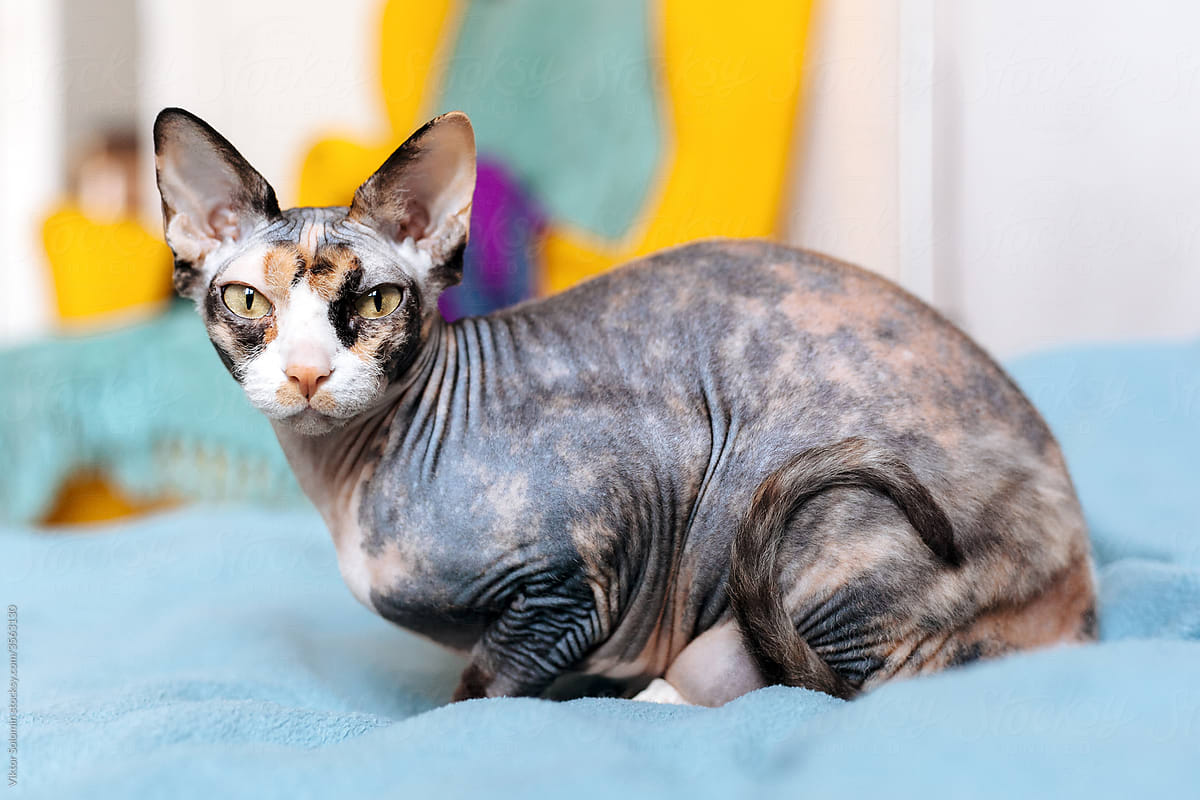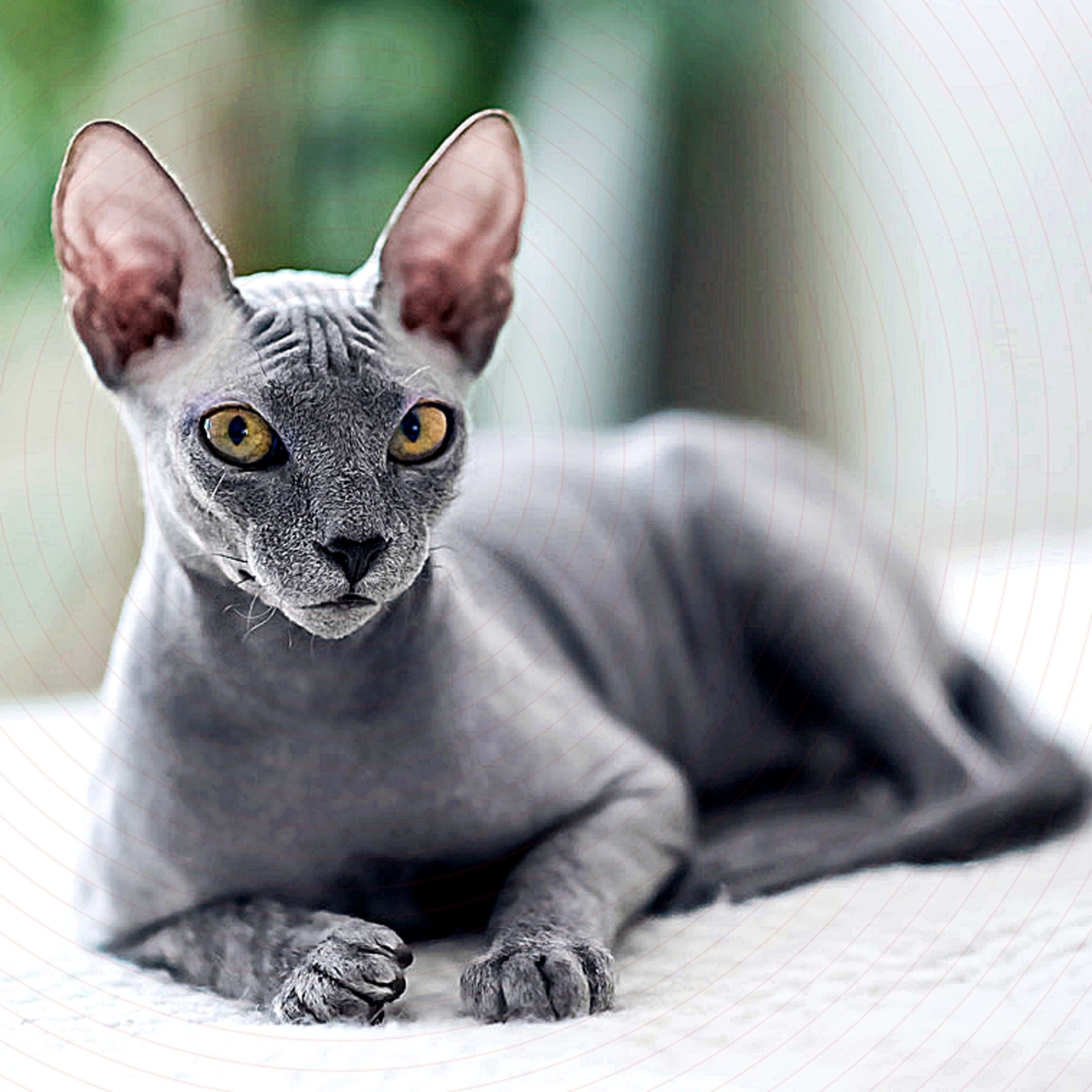
The world of domestic cats is a tapestry woven with countless breeds, each boasting unique characteristics, from the fluffy Persian to the sleek Siamese. Yet, among this diverse feline family, a select few stand out not for their luxurious coats, but for their striking lack thereof. These are the hairless cats, creatures of captivating appearance and often surprisingly affectionate personalities, challenging our conventional notions of what a cat "should" look like.
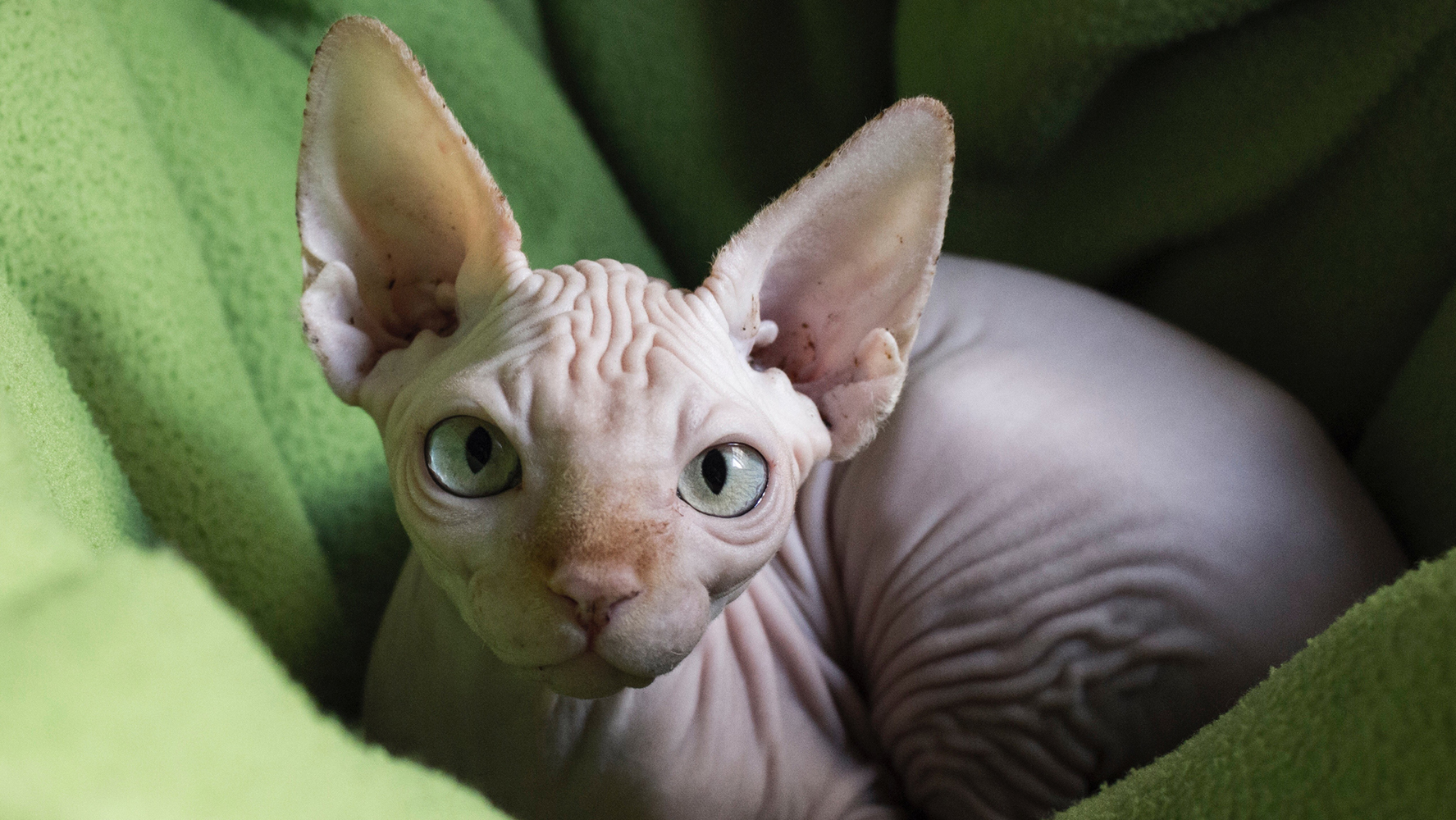
While often referred to as "hairless," it’s a misnomer for most. The majority of these breeds possess a fine, downy fuzz that feels akin to warm suede or a peach, rather than being completely devoid of hair. This unique texture, combined with their prominent ears, expressive eyes, and wrinkled skin, gives them an almost alien yet undeniably endearing quality. Their exposed skin also means they often feel warmer to the touch than their furry counterparts, as their body heat radiates directly from their bodies without the insulating layer of fur.
The existence of these fascinating felines is primarily due to spontaneous genetic mutations, which breeders then selectively developed to establish distinct breeds. Living with a hairless cat is a commitment to specialized care, but for those drawn to their unusual beauty and often dog-like devotion, the rewards are immeasurable. Let’s delve into the specific breeds that defy the fur standard and explore what makes each of them unique.
The Sphynx: The Pioneer of Hairlessness
When one thinks of a hairless cat, the Sphynx is almost invariably the first breed that comes to mind. Originating in Toronto, Canada, in 1966, the breed began with a kitten named Prune, born to a domestic cat with a spontaneous genetic mutation for hairlessness. This natural mutation, which is recessive, led to the development of the breed through careful selective breeding.
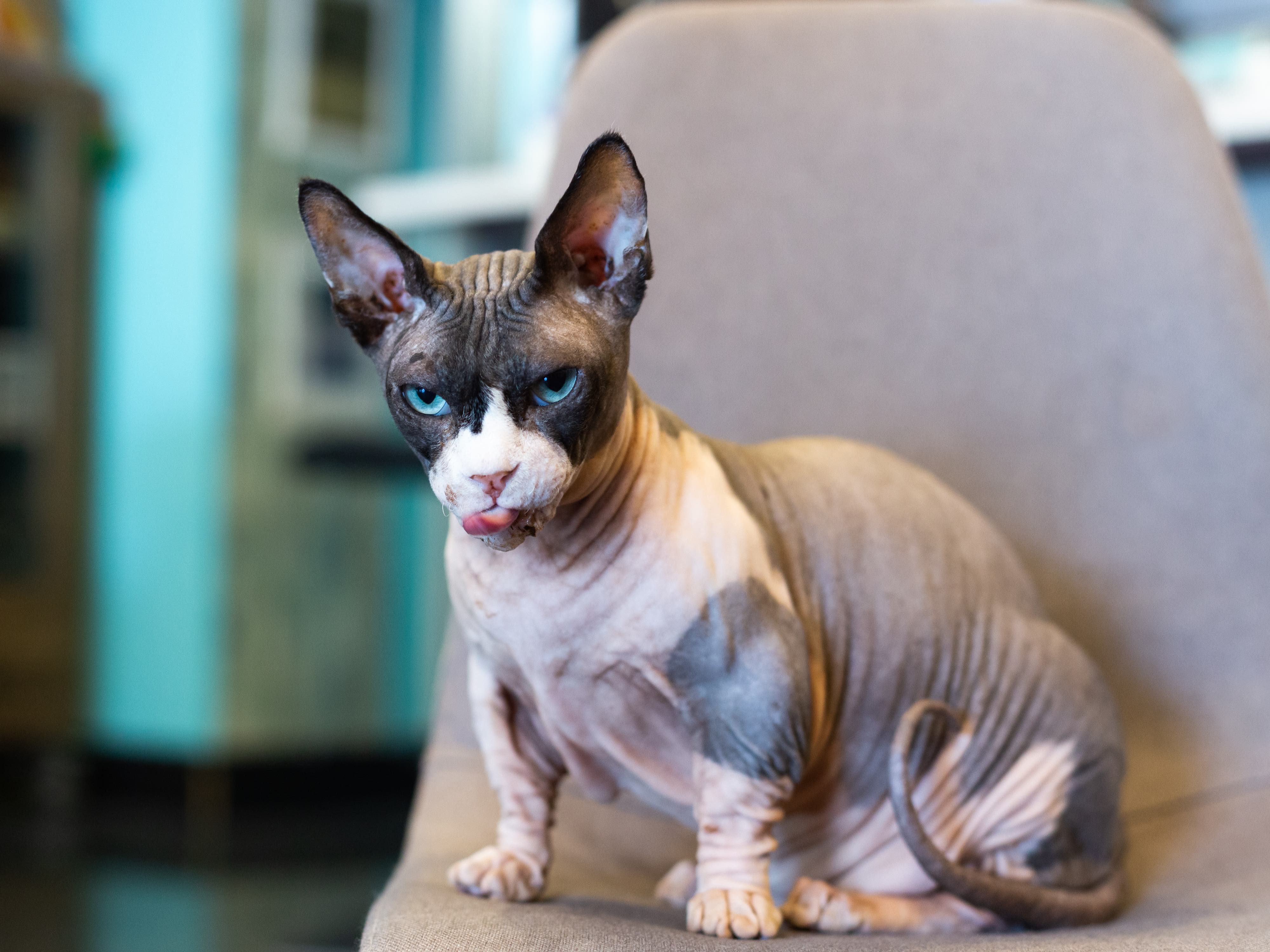
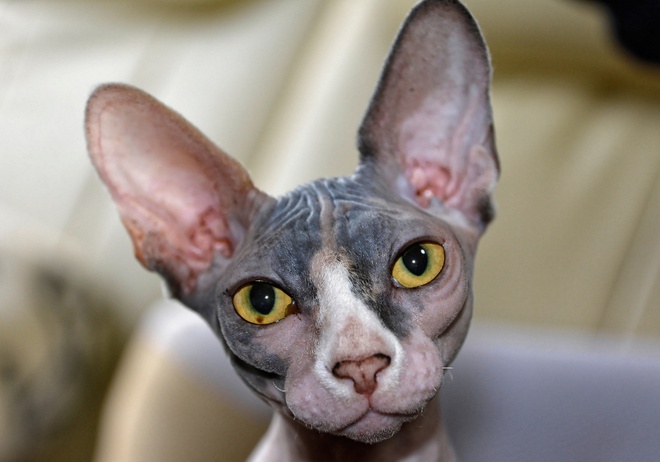
Appearance: The Sphynx is instantly recognizable. Their skin is wrinkled, particularly around the shoulders, neck, and head, giving them an ancient, wise appearance. Despite their lack of a full coat, their skin can come in a variety of colours and patterns, including solid colours, bi-colours, tabbies, and point patterns, which are visible on their skin pigmentation. They possess large, lemon-shaped eyes that are incredibly expressive, and strikingly large ears that are often compared to those of a bat. Their bodies are muscular and sturdy, with a distinctive potbelly that is characteristic of the breed. While appearing hairless, most Sphynx cats are covered in a fine layer of downy fuzz, giving them that soft, suede-like feel.
Temperament: Beyond their unique looks, the Sphynx is renowned for its exceptional personality. They are often described as "dog-like" in their devotion and sociability. Sphynx cats are incredibly affectionate, intelligent, and playful. They thrive on human interaction and will often follow their owners from room to room, demanding attention and cuddles. They are known for their curiosity, their ability to learn tricks, and their penchant for perching on shoulders or snuggling under blankets. Their high energy levels mean they enjoy interactive play and benefit from toys that challenge their minds. They generally get along well with children and other pets, making them excellent family companions.
Care Needs: The Sphynx’s lack of fur necessitates specific care routines. Without a coat to absorb body oils, their skin can become greasy and accumulate dirt. Regular bathing (typically once a week or every two weeks) with a gentle, cat-safe shampoo is essential to keep their skin clean and healthy and prevent skin issues. Their large ears also require frequent cleaning to remove wax and debris. Additionally, their exposed skin makes them susceptible to sunburn, so they should be protected from direct sunlight, and in colder climates, sweaters or blankets are necessary to help them regulate their body temperature. Their higher metabolism, needed to maintain body heat, means they often require more food than their furry counterparts.
The Russian Connection: Donskoy and Peterbald
While the Sphynx emerged from Canada, Russia has contributed two significant hairless breeds to the feline world: the Donskoy and the Peterbald. Both breeds trace their origins to the city of Rostov-on-Don and are distinct from the Sphynx due to a different genetic mutation responsible for their hairlessness.
The Donskoy (Don Sphynx)
The Donskoy’s story began in 1987 with a kitten named Varvara, found by Elena Kovaleva in Rostov-on-Don. Varvara started losing her fur at four months old, and despite attempts to treat her for various skin conditions, the hair loss persisted. When Varvara later had kittens, some of them also exhibited hair loss, confirming a dominant genetic mutation for hairlessness. This dominant gene is a key differentiator from the Sphynx’s recessive gene.
Appearance: Unlike the Sphynx, the Donskoy can exhibit varying degrees of hairlessness throughout its life, and some even develop a light coat in winter that sheds in summer. They are born with different "coat" types:
- Rubber Bald: Born completely hairless and remain so. Their skin is sticky and elastic.
- Flock: Born with a very fine, soft down that is barely visible, giving them a chamois-like texture. They may become completely bald over time.
- Velour: Born with a short, wavy coat that often disappears by two years of age, leaving residual hair on the face, legs, and tail.
- Brush: Born with a short, wiry, sparse coat that may remain throughout their lives or become completely hairless.
Donskoys are medium-sized, muscular cats with strong bones and wrinkled skin. They have distinctive webbed toes and almond-shaped eyes.
Temperament: Donskoys are known for their gentle, affectionate, and intelligent nature. They are highly social and form strong bonds with their families, often described as being very loyal and devoted. They are playful and curious, enjoying interactive games and exploring their surroundings. Their robust build often translates to a hardy and healthy disposition.
Care Needs: Similar to the Sphynx, Donskoys require regular bathing to manage skin oils. Their skin, especially the "rubber bald" type, can feel quite warm and sticky. Protection from sun and cold is crucial, and their ears and nails need routine cleaning.
The Peterbald
The Peterbald is a relatively newer breed, developed in St. Petersburg, Russia, in 1994, through the experimental breeding of a Donskoy and an Oriental Shorthair. The goal was to combine the hairlessness of the Donskoy with the elegant, svelte body type and vocal nature of the Oriental Shorthair.
Appearance: Peterbalds are characterized by their slender, elegant, and muscular bodies, often described as "Oriental" in type. They have a long, whip-like tail, webbed feet, and distinctive large, widely set ears. Their heads are wedge-shaped with almond-shaped eyes. Like the Donskoy, Peterbalds can be born with varying degrees of hair, from completely bald ("rubber bald") to a very fine flock, velour, or even a short "brush" coat. Some may even have a very short, fine coat that sheds out over time, becoming progressively more hairless. The most prized Peterbalds are often those that are truly bald or have a very minimal flock coat.
Temperament: Peterbalds are highly intelligent, active, and vocal cats. They are known for their dog-like loyalty and their tendency to follow their owners around the house, engaging in "conversations" with their wide range of meows and chirps. They are extremely affectionate and thrive on human companionship, often seeking out laps and snuggles. Their playful and curious nature means they enjoy interactive toys and mental stimulation. They are generally good with children and other pets, making them adaptable family members.
Care Needs: Due to their varying coat types, the care needs of a Peterbald can differ slightly. Those that are truly hairless or have minimal fuzz require regular bathing and protection from environmental extremes, similar to the Sphynx and Donskoy. Those with a brush coat may need less frequent bathing but still benefit from occasional grooming. All Peterbalds, regardless of coat, need their ears and nails cleaned regularly.
The Newer and Rarer Hairless Breeds
Beyond the established Sphynx, Donskoy, and Peterbald, several newer and much rarer hairless breeds have emerged, often resulting from crosses with other distinct breeds to introduce new physical traits. These breeds often face more scrutiny regarding their health and ethical breeding practices due to the combination of genetic traits.
The Bambino
The Bambino is a relatively new breed, created by crossing a Sphynx with a Munchkin (a breed known for its short legs due to a genetic mutation causing dwarfism). The name "Bambino" means "baby" in Italian, referring to their small stature.
Appearance: Bambinos possess the hairless, wrinkled skin, large ears, and expressive eyes of the Sphynx, but with the distinctively short legs of the Munchkin. This combination gives them a unique, almost miniature appearance.
Temperament: Like their Sphynx ancestors, Bambinos are generally affectionate, playful, and social. They enjoy human interaction and are often described as cuddly and curious. Their short legs don’t seem to hinder their ability to play and explore, though they may not be able to jump as high as other cats.
Care Needs: Bambinos require the same skin care as Sphynx cats, including regular bathing and protection from sun and cold. Ethical concerns often surround the breeding of cats with dwarfism, as it can potentially lead to spinal and other health issues. Reputable breeders will prioritize health screening.
The Elf Cat
The Elf cat is another hybrid hairless breed, resulting from a cross between a Sphynx and an American Curl. The aim was to combine the hairlessness of the Sphynx with the distinctive curled ears of the American Curl.
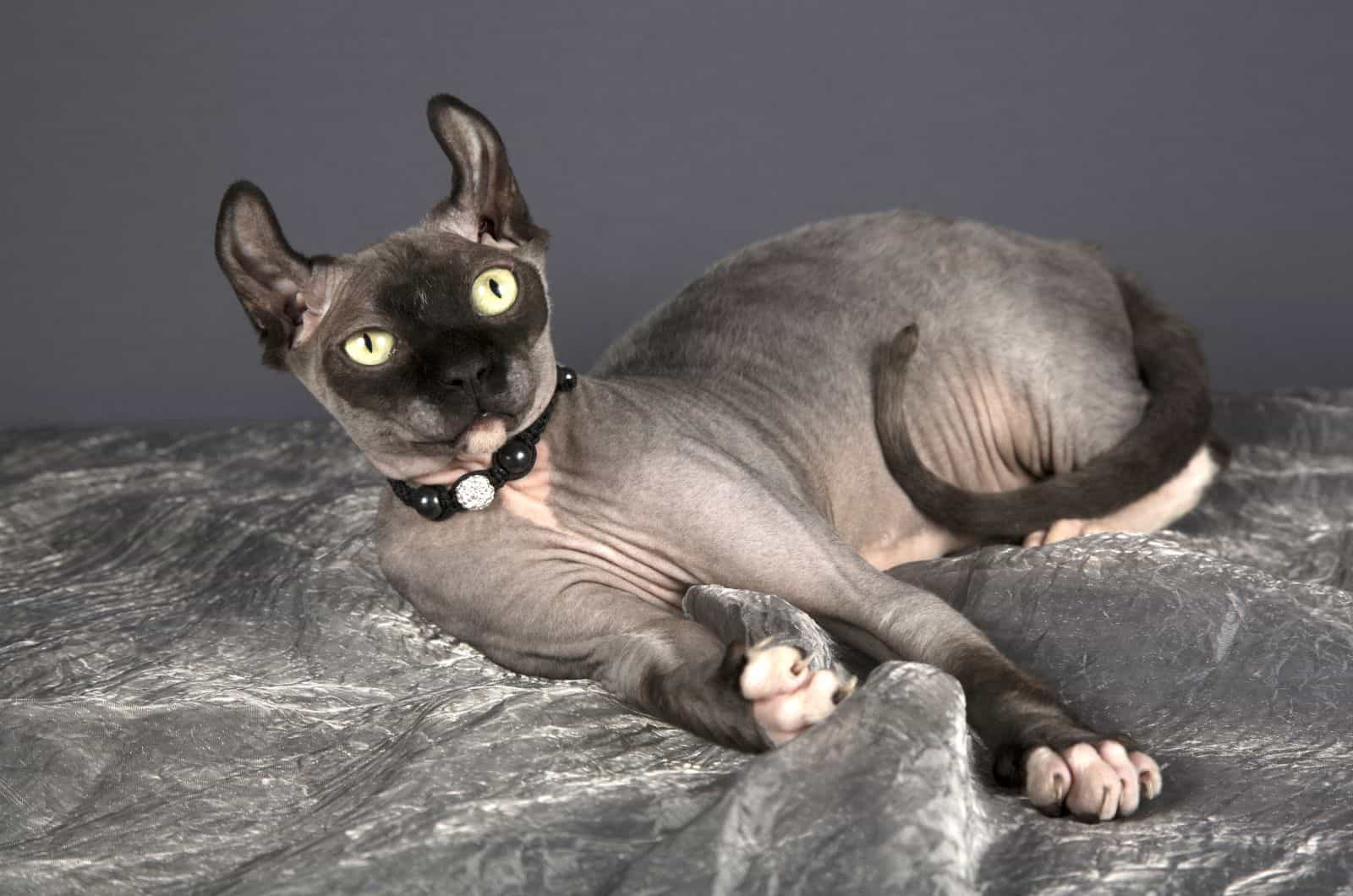
Appearance: Elf cats have the hairless, wrinkled body of a Sphynx, but their ears curl backward in an elegant arc, a trait inherited from the American Curl. This gives them a whimsical, almost elfin appearance, hence their name.
Temperament: Elf cats are generally known for being intelligent, affectionate, and playful, much like their Sphynx ancestors. They are social cats that enjoy being part of the family and thrive on attention.
Care Needs: Similar to the Sphynx, Elf cats require regular skin care, including bathing and protection from environmental extremes. Their unique ears also require careful cleaning to prevent wax buildup and irritation.
The Dwelf
The Dwelf is perhaps the most unique and controversial of the newer hairless breeds, combining traits from three distinct breeds: the Sphynx (hairlessness), the Munchkin (short legs), and the American Curl (curled ears).
Appearance: Dwelfs are characterized by their hairless, wrinkled bodies, short legs, and curled ears. They are small in stature, combining the dwarfism of the Munchkin with the other distinct features.
Temperament: Dwelfs are typically described as affectionate, playful, and highly social, embodying the best personality traits of their parent breeds.
Care Needs: Dwelfs require intensive skin care, similar to the Sphynx. Their short legs and curled ears also necessitate specific attention. Due to the combination of genetic mutations, particularly dwarfism, ethical considerations and potential health issues are significant concerns with this breed, making it crucial to seek out only the most reputable and health-conscious breeders.
The Kohana (Possibly Extinct)
The Kohana is a fascinating, albeit extremely rare and possibly extinct, breed that originated in Hawaii. What set the Kohana apart was its claim to be truly hairless, lacking even the fine down of other hairless breeds. Their skin was said to be sticky and rubbery. Due to their extreme rarity and potential health challenges associated with true hairlessness, information on them is limited, and they are not recognized by major cat registries.
Living with a Hairless Cat: Unique Considerations
Choosing to bring a hairless cat into your home is a decision that comes with unique responsibilities, primarily due to their lack of a protective fur coat.
- Temperature Regulation: Without fur, these cats are highly susceptible to temperature fluctuations. They get cold easily, especially in winter or air-conditioned environments. Providing sweaters, warm blankets, and heated beds is essential. Conversely, they can also get sunburned if exposed to direct sunlight for too long, so sun protection is necessary.
- Skin Care: Regular bathing (weekly to bi-weekly) is crucial to remove the natural oils and dirt that accumulate on their skin. Using a gentle, cat-specific shampoo is important to prevent skin irritation. Some owners also use a light, non-comedogenic moisturizer to keep their skin supple.
- Ear and Nail Care: Their large ears tend to accumulate more wax and debris than those of furry cats, requiring frequent cleaning with a vet-approved ear cleaner. Their nails also need regular cleaning, as oils and dirt can build up around the nail beds.
- Diet: Hairless cats often have a higher metabolism to maintain their body temperature, meaning they may require more food than other breeds of similar size.
- Allergies: While often touted as "hypoallergenic," no cat is truly hypoallergenic. People are usually allergic to Fel d 1 protein found in cat saliva, dander, and urine. Hairless cats produce less dander because they have less hair to shed, and their regular bathing can help reduce allergen levels. However, they still produce the protein, so individuals with severe allergies may still react.
- Ethical Breeding: Given the unique genetic mutations and potential health challenges (like HCM in Sphynx or skeletal issues in dwarf breeds), it is paramount to choose a reputable breeder who conducts thorough health screenings, provides genetic testing, and prioritizes the well-being of their cats.
Conclusion
The world of hairless cats is a testament to the incredible diversity within the feline species. From the well-established Sphynx to the elegant Peterbald and the more controversial newer breeds, these cats offer a truly unique companionship experience. Their striking appearance, often coupled with an extraordinarily affectionate and intelligent personality, makes them much more than just a novelty.
While their specialized care requirements demand a committed owner, the bond formed with a hairless cat is often described as profound and deeply rewarding. They are playful, curious, and often "dog-like" in their devotion, thriving on human interaction and becoming an integral part of the family. For those willing to embrace their unique needs, hairless cats are not just pets; they are captivating, warm-skinned companions that will undoubtedly leave an indelible paw print on your heart.