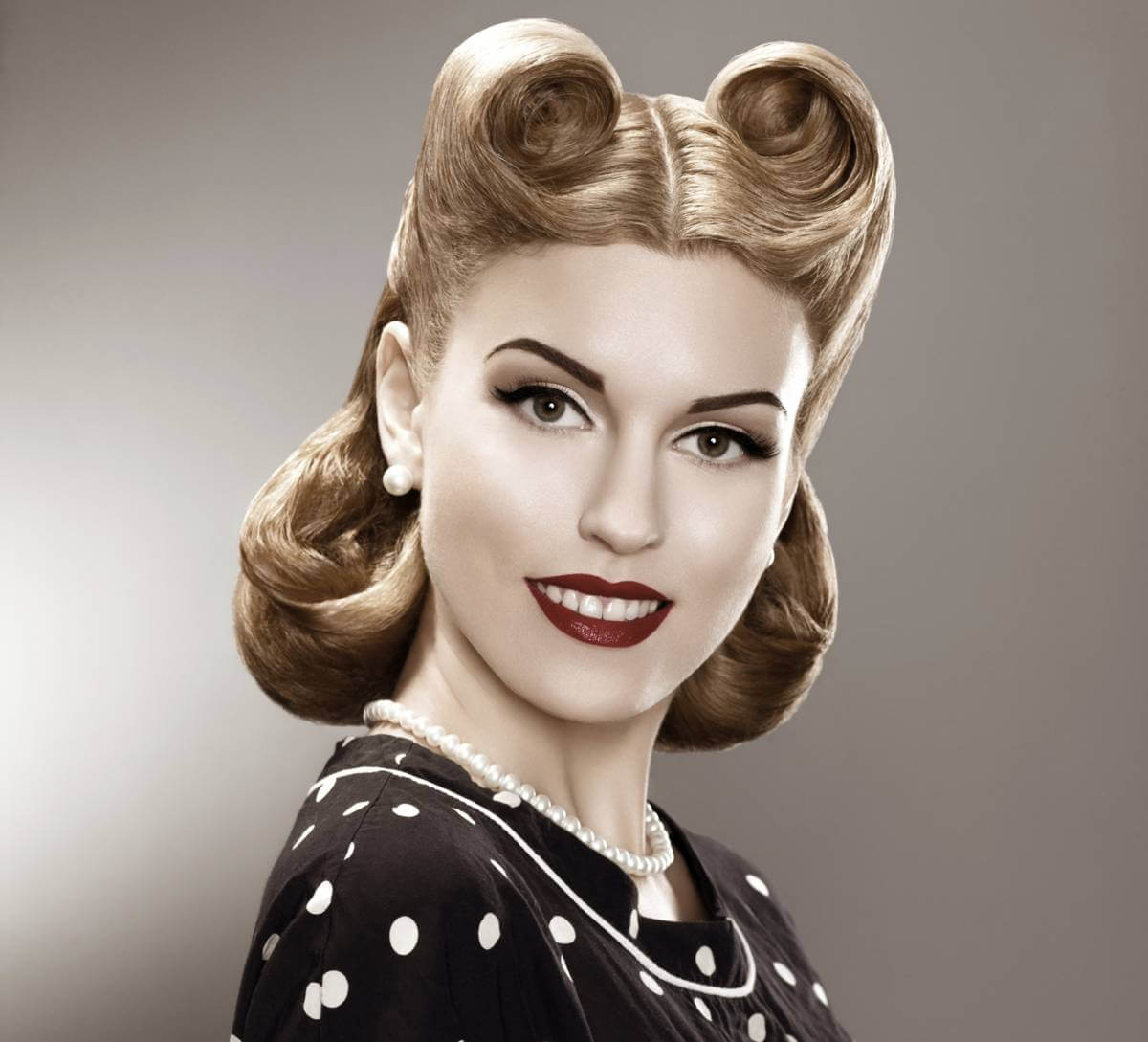
The 1950s, a decade often romanticized as an era of post-war optimism, burgeoning consumerism, and a distinct redefinition of gender roles, left an indelible mark on fashion and beauty. While full skirts, cinched waists, and pearls became synonymous with the era’s feminine ideal, it was perhaps the meticulously sculpted hairstyles that truly encapsulated the spirit of the time. Far from casual, 1950s hair was an art form, a carefully constructed statement of elegance, sophistication, and sometimes, playful rebellion.
Emerging from the practicalities and austerity of the 1940s, where Victory Rolls and utilitarian updos dominated, the 1950s ushered in a new era of glamour. Women, many returning to domestic roles after wartime factory work, embraced a vision of femininity that was polished, poised, and perfectly coiffed. Hollywood, as ever, played a colossal role in dictating trends. Stars like Marilyn Monroe, Audrey Hepburn, Grace Kelly, Elizabeth Taylor, and Lucille Ball became living mood boards, their iconic locks inspiring millions of women to emulate their sophisticated, often high-maintenance looks.
The underlying philosophy of 1950s hair was structure and volume. Gone were the soft, unkempt waves of earlier decades; in their place came a preference for defined curls, polished waves, and styles that held their shape with remarkable tenacity. This was largely facilitated by the widespread availability of new styling products, most notably hairspray, which became an indispensable tool in every woman’s beauty arsenal.
The Reign of the Short and Sculpted:
While longer styles certainly had their place, many of the most iconic looks of the 1950s were surprisingly short or medium length, emphasizing the neck and jawline.
One of the most instantly recognizable styles was The Poodle Cut. Made famous by Lucille Ball in "I Love Lucy," this playful yet sophisticated style featured tightly curled hair, often permed, that was cropped short and piled high on the head, resembling the fluffy coat of a poodle. It was bouncy, vivacious, and perfectly suited to the era’s burgeoning sense of fun and domestic bliss. The Poodle Cut was surprisingly versatile; it could be worn with a side part, a center part, or even swept back, but its defining characteristic was always its abundance of tight, springy curls that framed the face. It was a style that required regular setting and often a perm to maintain its distinctive texture, making it a testament to the dedication women had to their appearance.
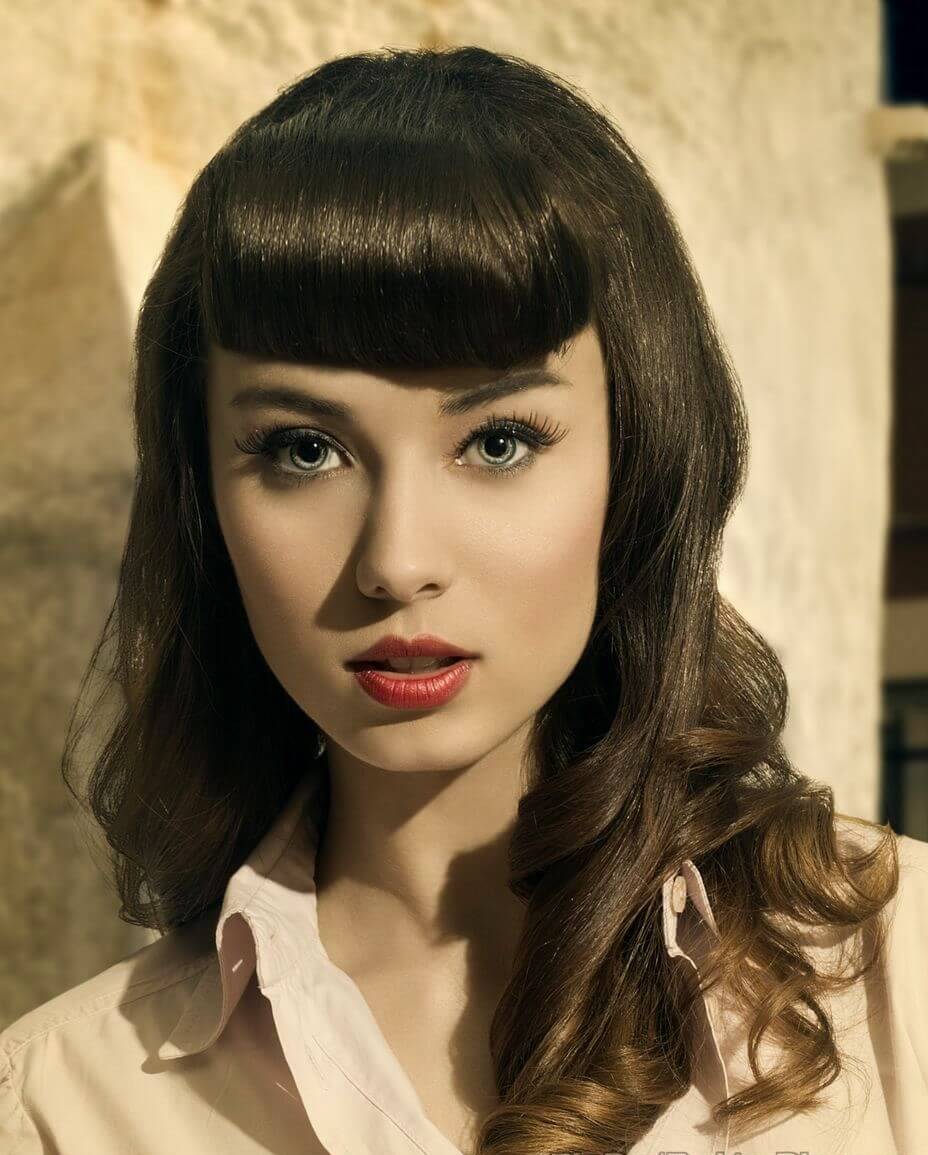
Another immensely popular and enduring style was The Pageboy. This cut featured hair that was typically chin-length or slightly longer, with the ends curled inwards to create a smooth, rounded shape that framed the face. It was sleek, elegant, and conveyed an air of understated sophistication. The Pageboy was a favorite among women of all ages, from teenagers to mature women, because of its versatility and flattering silhouette. It could be worn with a fringe (bangs) or swept back, and its clean lines made it adaptable to both casual and formal occasions. Grace Kelly, with her refined elegance, often sported variations of the Pageboy, solidifying its status as a classic.
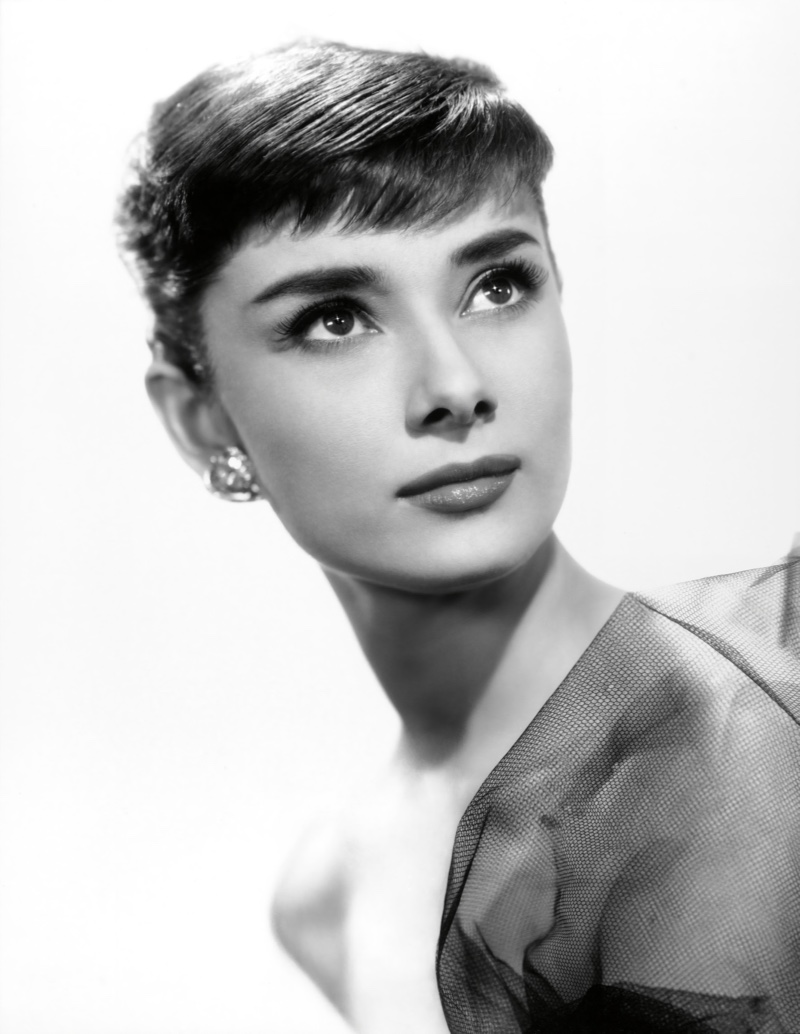
For those who dared to go even shorter, The Pixie Cut, or "Gamine" style, emerged as a symbol of chic rebellion. While not as widespread as the Poodle or Pageboy, it gained significant traction thanks to Audrey Hepburn, whose iconic short crop in "Roman Holiday" (1953) redefined femininity. The Pixie was characterized by very short, close-cropped hair, often with short bangs, highlighting the face and neck. It was a bold statement, conveying youthfulness, independence, and a certain playful sophistication that contrasted with the more traditionally glamorous looks. The Pixie required confidence to pull off, but for those who embraced it, it offered an effortlessly chic and modern alternative.
The Allure of Longer, Glamorous Waves:
While shorter styles dominated the everyday, the ultimate expression of 1950s Hollywood glamour often involved longer, more flowing hair, meticulously styled into soft waves or voluminous curls.
The Bouffant, while more famously associated with the early 1960s, began its ascent in the latter half of the 1950s. This style emphasized extreme volume at the crown, achieved through backcombing (teasing) and copious amounts of hairspray. The hair was then smoothly brushed over the teased base, creating a rounded, elevated silhouette. The Bouffant was a sophisticated and dramatic look, often paired with elegant evening wear, and symbolized a step towards the more exaggerated styles of the coming decade. It was a testament to the era’s fascination with height and sculpted forms.
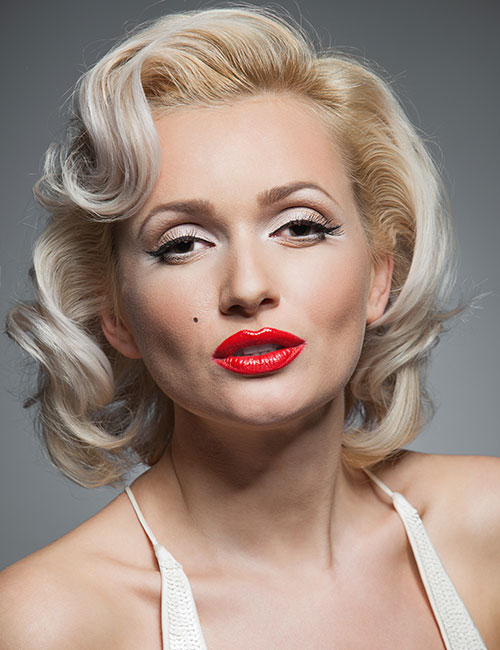
No discussion of 1950s glamour would be complete without mentioning the iconic Hollywood Waves. Epitomized by Marilyn Monroe, these were not loose, natural waves but rather highly structured, perfectly uniform curls that cascaded around the face. Whether platinum blonde like Monroe or dark and lustrous like Elizabeth Taylor, these waves were painstakingly created using rollers or hot irons, brushed out just enough to merge into a single, polished wave, and then held firmly in place with hairspray. The look was undeniably sensual, exuding a polished allure that defined the silver screen sirens of the era. This style, often worn with a deep side part, framed the face beautifully and conveyed an air of untouchable glamour.
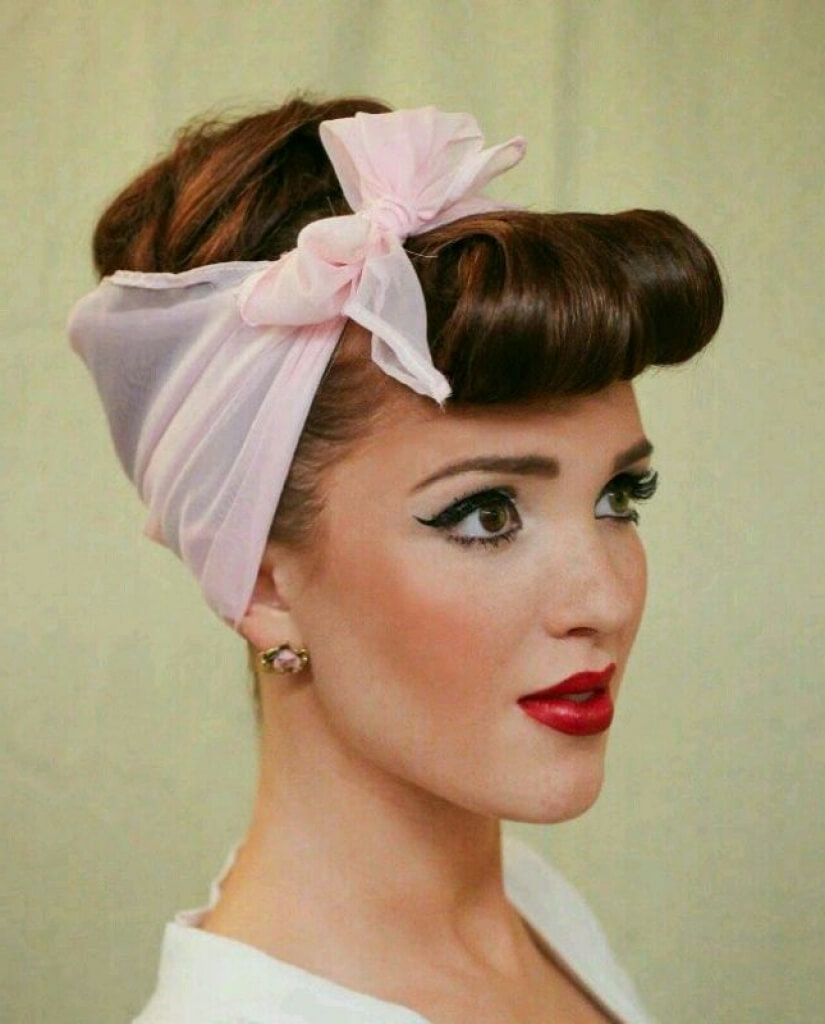
Beyond the structured curls, the simple Ponytail also found its place, particularly among teenagers and for more casual settings. While not as "styled" as other looks, the 1950s ponytail was often worn high on the crown, sometimes with a bouncy curl at the end, and frequently adorned with a scarf or a ribbon. It represented a youthful, fresh-faced approach to hair, a stark contrast to the more elaborate styles worn by their mothers. It was a nod to practicality without sacrificing a sense of neatness and charm.
The Art of Setting and Maintenance:
Achieving these sculpted looks was no small feat and required significant time, effort, and a specific set of tools and products. The foundation of almost every 1950s hairstyle was setting. This involved washing the hair, applying a setting lotion, and then meticulously rolling sections of damp hair onto various types of rollers – brush rollers, sponge rollers, or even pin curls (small sections of hair coiled and pinned flat against the scalp). The hair would then be left to dry, often under a bonnet dryer or simply overnight.
Once dry, the rollers were carefully removed, and the magic began. The resulting tight curls were then brushed out, often vigorously, to soften them into the desired waves or bouffant shape. This brushing was crucial; it transformed the individual curls into a cohesive, flowing silhouette. Backcombing (or teasing) was another essential technique, especially for creating volume at the crown for bouffants or adding lift to shorter styles. Strands of hair were pushed down towards the scalp with a comb, creating a tangled base that provided structure.
Finally, the entire creation was doused in hairspray. The 1950s saw the popularization of aerosol hairspray, a true game-changer that allowed these elaborate styles to hold their shape for days. Hairnets were also commonly used, especially for sleeping or to keep a style intact. Many women also relied on weekly salon visits for professional sets and touch-ups, highlighting the importance placed on perfectly maintained hair.
A Lasting Legacy:
The women’s hairstyles of the 1950s were more than just fashion trends; they were a reflection of a society grappling with new ideals of domesticity, glamour, and evolving femininity. They represented a meticulous approach to beauty, a dedication to presentation that underscored the era’s emphasis on polish and perfection. From the playful bounce of the Poodle Cut to the sophisticated sweep of the Pageboy and the untouchable allure of Hollywood Waves, these styles were meticulously crafted works of art.
Today, the influence of 1950s hairstyles continues to resonate. They are a constant source of inspiration for retro fashion, red carpet events, and bridal looks, proving that true elegance and a touch of well-placed glamour never truly go out of style. The sculpted silhouettes of the 1950s remain a timeless testament to an era where hair was not just an accessory, but a crowning glory, carefully designed to turn heads and embody an aspirational ideal.