For many men, a haircut isn’t just a trim; it’s a statement, an extension of personality, and a significant factor in how they perceive themselves and are perceived by others. Yet, the process of choosing a new hairstyle often feels like a gamble. You scroll through celebrity photos, point vaguely at a picture on your phone, and hope for the best, only to sometimes walk out of the barber’s chair with a gnawing sense of regret.
What if there was a way to "try before you buy" when it comes to your hair? The good news is, in today’s digital age, and with a bit of practical ingenuity, there are numerous methods for guys to virtually or physically "try on" hairstyles before committing to the scissors. This comprehensive guide will delve into the why, how, and what of trying on hairstyles, empowering you to make confident, informed decisions about your next look.
The "Why": Eliminating the Haircut Gamble
Before we dive into the how-to, let’s understand why trying on hairstyles is a game-changer for men:
- Avoid Regret and Bad Hair Days: The most obvious benefit. A bad haircut can impact your confidence for weeks or even months. Trying on styles minimizes this risk significantly.
- Boost Confidence: Knowing a style suits you before you get it can lead to a profound sense of confidence, not just in your appearance but in your decision-making.
- Explore Beyond Your Comfort Zone: Many men stick to the same few styles out of habit or fear of change. Trying on allows you to experiment with bolder, trendier, or completely different looks without commitment.
- Understand Face Shape Compatibility: A style that looks fantastic on a celebrity might not suit your unique face shape. Trying on helps you visualize how different cuts complement your features.
- Align with Lifestyle and Maintenance: Some styles require significant upkeep. Trying them on can give you a clearer picture of the daily commitment before you’re stuck with it.
- Save Time and Money: Frequent trips to fix a bad cut or waiting for hair to grow out costs both time and money.
Modern Methods: The Virtual Salon Experience
The digital revolution has brought the barbershop to your fingertips, offering surprisingly realistic ways to preview new looks.
1. Mobile Apps and Websites
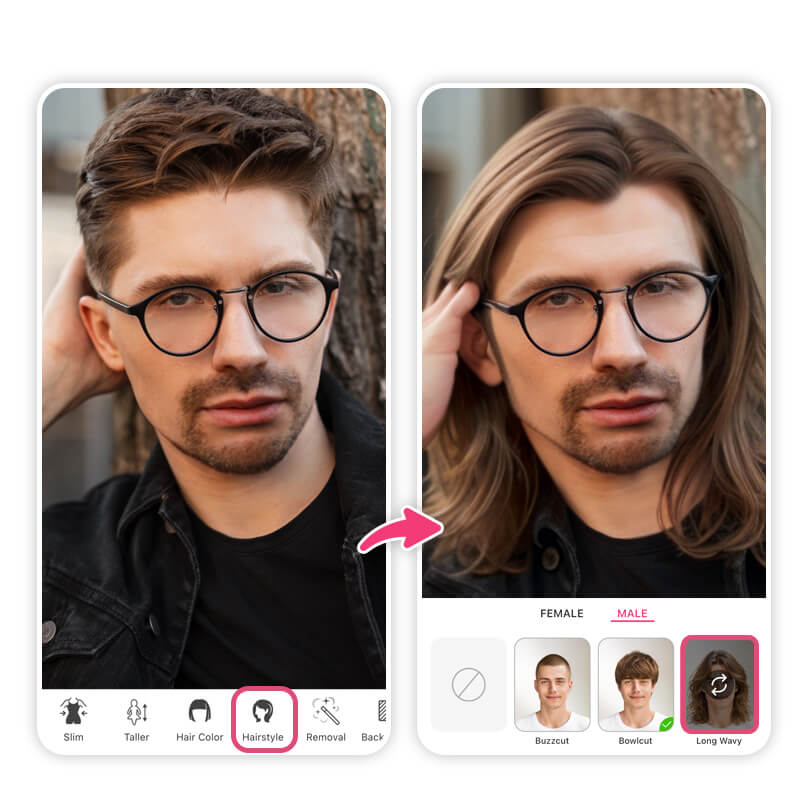
Numerous applications and websites are designed specifically for virtual hairstyle try-on. These tools leverage advanced algorithms and sometimes AI to superimpose different hairstyles onto your photo.
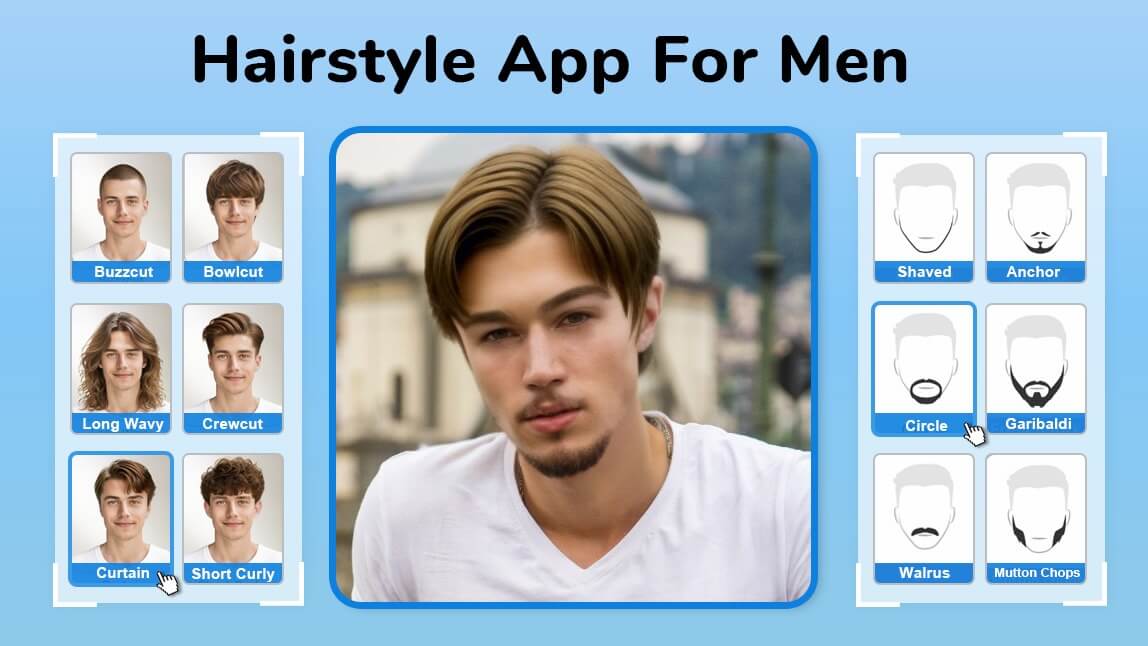
- How They Work: You typically upload a clear, well-lit, front-facing photograph of yourself. The app then allows you to browse a vast library of hairstyles, from classic cuts like the pompadour and crew cut to modern fades, fringes, and longer styles. You can often adjust the size, position, and even color of the superimposed hair to get a more accurate representation.
- Popular Features: Many apps offer filters for face shape, hair texture (straight, wavy, curly), and even the ability to see how a style looks with different beard lengths or glasses. Some even provide "virtual stylist" recommendations based on your uploaded photo.
- Pros:
- Convenience: Try on styles anytime, anywhere.
- Vast Selection: Access to hundreds, if not thousands, of styles.
- No Commitment: Experiment freely without fear.
- Instant Feedback: See results immediately.
- Cons:
- Realism Varies: The quality of the overlay can range from highly convincing to comically fake, depending on the app and the photo quality.
- Lighting and Angle Issues: A poor photo can lead to inaccurate results.
- Texture Limitations: While some apps offer texture options, they can’t perfectly replicate how a style will look on your specific hair type (e.g., fine vs. thick, coarse vs. silky).
- Subscription Models: Many of the better apps require a paid subscription for full access.
2. Augmented Reality (AR) Filters
Social media platforms like Instagram, Snapchat, and TikTok often feature AR filters that allow you to see hairstyles in real-time using your phone’s camera.
- How They Work: Unlike photo uploads, AR filters use your live camera feed to overlay digital hair onto your head. As you move, the hair moves with you, offering a dynamic preview.
- Pros:
- Interactive and Dynamic: See the style from different angles as you move your head.
- Fun and Engaging: Great for quick, casual experimentation.
- Real-Time: No need to upload photos; just open the camera.
- Cons:
- Often Exaggerated: AR filters are frequently designed for entertainment, so the styles might be less realistic or more cartoonish than practical.
- Limited Selection: The range of styles is usually smaller and curated by the filter creator.
- Not Ideal for Serious Decisions: While fun, they’re generally not the best tool for making a definitive choice.
3. Professional Photo Editing Software
For those with a bit of technical savvy or access to a graphic designer, professional software like Adobe Photoshop can be used to meticulously superimpose and blend hairstyles.
- How It Works: A skilled editor can take a photo of your face and combine it with high-resolution images of various hairstyles, adjusting lighting, shadows, and hair texture to create a highly realistic composite.
- Pros:
- Unparalleled Realism: Can produce incredibly convincing results.
- Customization: Complete control over every detail.
- Cons:
- Requires Skill: Not for the average user.
- Time-Consuming: Can take significant time to create a good composite.
- Costly: If hiring a professional.
Practical & Low-Tech Methods: Beyond the Screen
While virtual tools are powerful, sometimes a more tangible approach is needed.
1. Wigs and Hairpieces
Once primarily associated with women or theatrical performances, high-quality men’s wigs and hairpieces (toupees) are becoming more accessible and realistic.
- How They Work: You can purchase or rent wigs in various styles, lengths, and colors. Trying them on physically gives you a true sense of the weight, texture, and how the hair falls.
- Pros:
- Tangible Realism: The most accurate physical representation of a new style.
- Feel and Weight: Experience the actual feel of the hair.
- Color Experimentation: Great for trying out drastic color changes without dyeing your own hair.
- Cons:
- Cost: Quality wigs can be expensive.
- Fit: Finding a wig that perfectly fits your head can be challenging.
- Perception: Some men might feel self-conscious about trying on wigs.
2. Haircut Simulations with Your Existing Hair
You can often mimic a new style using your current hair, especially if you have some length to work with.
- How It Works:
- For Shorter Styles: If you have longer hair, try pinning it up or slicking it back tightly to simulate a shorter cut like a buzz cut or a crew cut. Use gel or strong pomade to mimic a slicked-back or quiffed look.
- For Longer Styles: If your hair is medium length, try letting it grow out for a few weeks to see how it naturally falls, or experiment with different partings and styling products to see if you can achieve a desired longer look (e.g., a man bun, a messy fringe).
- Pros:
- Free: Costs nothing but a bit of product and time.
- Uses Your Own Hair: Gives you an idea of how your specific hair texture will behave.
- Cons:
- Limited: Can only simulate styles that are shorter than or similar to your current length.
- Not Always Accurate: Can be difficult to perfectly replicate a cut.
3. Consultation with a Professional Barber or Stylist
While not a "try-on" in the traditional sense, a skilled barber or stylist can offer invaluable advice based on their experience.
- How It Works: Bring photos of styles you like (and dislike). Discuss your face shape, hair type, lifestyle, and maintenance preferences. A good stylist can tell you what’s feasible, what will suit you, and suggest modifications. They can often "dry cut" or use clippers without fully committing to show you how certain lines or lengths would look.
- Pros:
- Expert Opinion: Benefit from years of professional experience.
- Personalized Advice: Tailored recommendations for your unique features.
- Realistic Expectations: They can manage your expectations about what’s achievable.
- Cons:
- Relies on Communication: You need to articulate your desires clearly.
- Subjective: Their opinion is still just that – an opinion.
4. Visualizing and Observing
Sometimes, the simplest method is to pay close attention to others.
- How It Works: Look at friends, celebrities, models, or even strangers with hairstyles you admire. Mentally superimpose their hair onto your face. Pay attention to how the style looks on different face shapes and hair types similar to yours.
- Pros:
- Free and Easy: Requires no special tools.
- Inspiration: Great for sparking ideas.
- Cons:
- Subjective: Highly reliant on your imagination.
- Not a Direct Try-On: You’re not actually seeing it on you.
Key Factors to Consider When Trying On Hairstyles
Regardless of the method you choose, certain factors will heavily influence whether a style truly suits you.
1. Face Shape
This is perhaps the most crucial factor. Different cuts can enhance or soften features, creating balance.
- Oval: Considered the most versatile. Almost any style works, but avoid heavy fringes that shorten the face.
- Round: Aim to add height and angularity to lengthen the face. Styles like the pompadour, quiff, or a high fade with volume on top work well. Avoid heavy fringes or styles that add width.
- Square: Can either soften the strong jawline or enhance it. Softer, textured styles (e.g., messy quiff, side part with volume) can soften. Clean, sharp cuts (e.g., buzz cut, slick back) can enhance the masculine angles.
- Long/Oblong: The goal is to add width and avoid excessive height. Side parts, fringes, and styles with volume on the sides (like a textured crop or a messy fringe) are good. Avoid styles that add height or are too short on the sides.
- Heart: Characterized by a wider forehead and narrower chin. Styles that balance the forehead with the chin, such as a medium-length fringe or a textured crop, work well. Avoid styles that add too much volume to the top.
- Diamond: Narrow forehead and jawline with wider cheekbones. Styles that add width to the forehead and jawline, like a textured fringe or a side-swept look, can balance the face.
2. Hair Type and Texture
Your natural hair characteristics dictate how a style will lay and behave.
- Straight: Can hold sharp lines and sleek styles (e.g., slick back, classic side part). May lack volume unless specifically styled.
- Wavy: Versatile. Can be styled sleek or messy. Great for textured crops, quiffs, and natural-looking styles.
- Curly/Coily: Best embraced. Fades with textured tops, natural afros, or longer, controlled curls. Avoid trying to force straight styles unless you’re committed to extensive heat styling.
- Thickness/Density: Fine hair might struggle with voluminous styles, while thick hair might need significant thinning for certain cuts.
- Hairline: A receding hairline might benefit from a fringe, a buzz cut, or a slick back that minimizes the appearance of recession.
- Growth Patterns: Cowlicks or strong growth patterns can affect how hair falls and might require specific styling or cuts to manage.
3. Lifestyle and Maintenance
A great haircut shouldn’t be a burden.
- Professional vs. Casual: Does your job require a neat, conservative look, or can you embrace something more edgy or artistic?
- Time Commitment: Are you willing to spend 15-20 minutes styling your hair every morning, or do you prefer a wash-and-go solution?
- Product Use: Are you comfortable using pomades, gels, waxes, and sprays, or do you prefer minimal product?
- Frequency of Trims: Some styles (e.g., fades, crops) require frequent trims (every 2-4 weeks) to maintain their shape, while longer styles can go longer.
4. Personal Style and Confidence
Ultimately, your haircut should make you feel good.
- Does it Feel "You"? Even if a style technically suits your face shape, if it doesn’t align with your personality or makes you feel uncomfortable, it’s not the right choice.
- Comfort Level: Are you ready for a drastic change, or do you prefer subtle evolution?
Tips for Successful Try-Ons
- Use High-Quality Photos: For apps, use a well-lit, clear, front-facing photo with a neutral expression and your hair pulled back if possible.
- Try Multiple Styles: Don’t stop at the first one that looks good. Experiment widely.
- Get Second Opinions: Share your virtual try-ons with trusted friends or family. They might offer perspectives you hadn’t considered.
- Consider a Gradual Change: If you’re unsure about a drastic change, consider a phased approach. For example, instead of going from long to a buzz cut, try a medium-length style first.
- Communicate Clearly with Your Barber: Once you’ve chosen a style, bring your virtual try-on photos to your barber. Use clear language to describe what you want, and listen to their professional advice.
Conclusion
The days of blindly trusting the barber’s scissors are over. With the array of virtual and practical tools available, men now have unprecedented power to preview and refine their desired hairstyles. By understanding the "why" behind trying on, exploring modern and traditional methods, and critically evaluating factors like face shape, hair type, and lifestyle, you can transform the haircut experience from a gamble into a confident, empowering decision. Your hair is a canvas for self-expression; take the time to ensure your next masterpiece truly reflects the best version of you.